
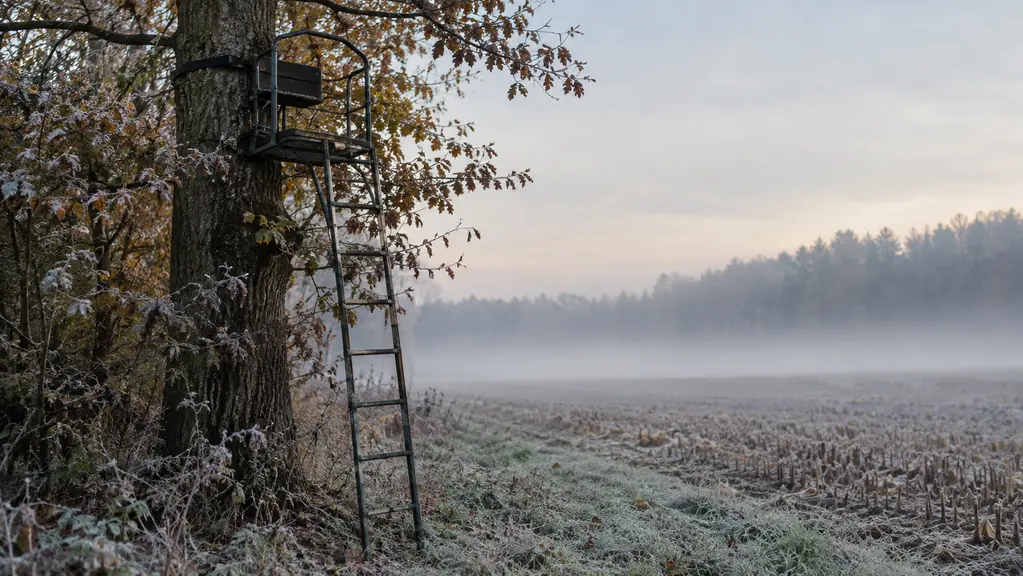
Last October I sat in my ground blind for the third morning in a row and watched nothing cross the field. I knew there was a shooter buck on that piece of ground. I'd found his rubs, I'd found his tracks, and I'd hunted those rubs and tracks to the point of frustration. The truth is, I was hunting where he had been, not where he was going. I had no idea what time he moved, which trail he preferred, or whether he ever crossed that field in daylight.
A buddy who hunts the same wildlife area kept telling me to try a trail camera. I'd written them off years ago after a cheap one ate a set of batteries in two weeks and gave me nothing but blurry photos of raccoons. He showed me the photos his GardePro A3S had pulled off a creek crossing: a buck at 2:47 in the morning, a group of does an hour before daylight, a coyote that I didn't even know was on the place. That was enough. I ordered one.
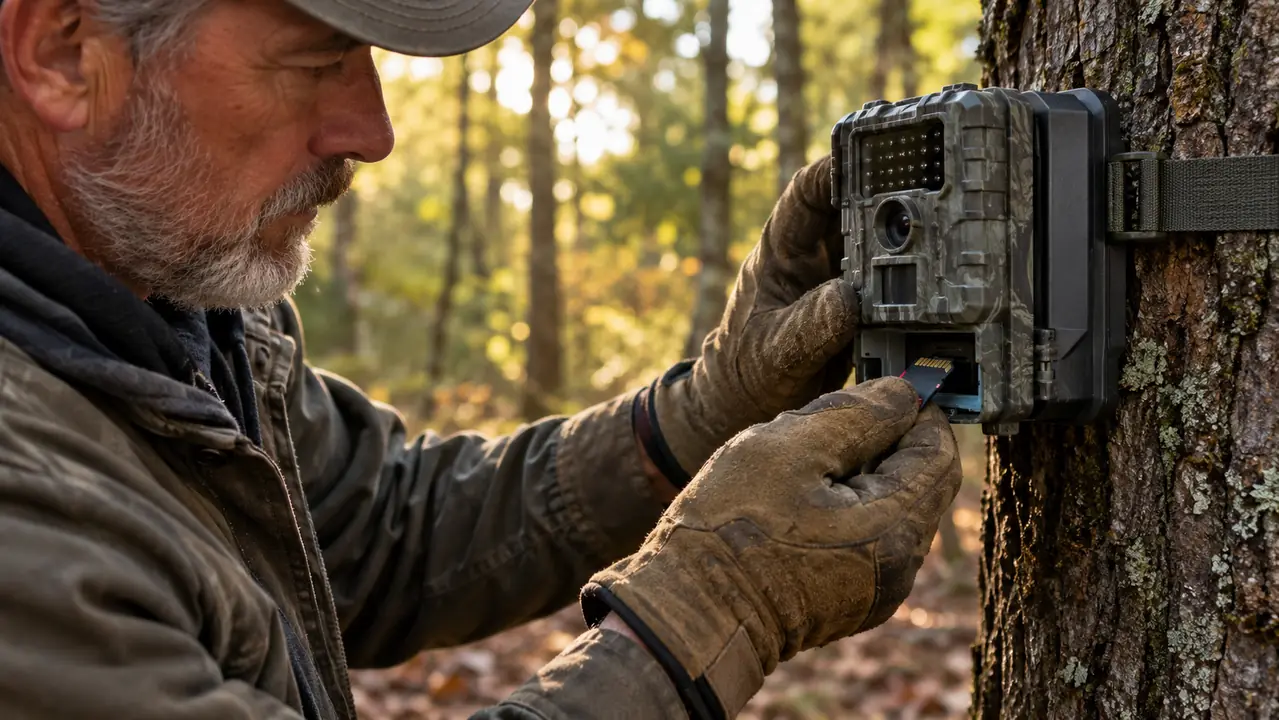
When it showed up, setup took about ten minutes. Eight AA batteries, an SD card, and a strap around a tree. The GardePro A3S is a non-cellular camera, which means it stores everything on the card and you have to walk to it to see what it caught. For me, that's a feature, not a limitation. My spots are on family land and a public wildlife area where cell signal is weak anyway, and having to walk in once a week keeps me from overchecking and bumping deer out of the area.
I strapped it to a tree where a trail left the bedding thicket and headed toward the creek, set it to take three photos per trigger with a 30-second delay, and left it alone for a week. The first card pull told me more than a month of mornings in the blind had. Fourteen nights of movement. Does crossing late in the afternoon, a young buck following the same trail an hour behind them, and the shooter buck, the one I'd been hunting, walking that exact trail at 11:40 PM. He was on that property every single night, and I never saw him once in daylight.
The fix was simple. I moved my ladder stand forty yards to the east, off the field edge and into the treeline where that trail came out of the thicket. Two weeks later I had a doe in the freezer and I'd passed on a young buck that came through at 4:15 in the afternoon. More important than the meat, I finally understood that piece of ground. The camera didn't make the deer move. It just showed me where and when they already were.
Fourteen nights of movement on that card, and the buck I'd been hunting all season showed up at 11:40 PM on a trail forty yards from where I'd been sitting.
Stop hunting the sign. Let the card tell you where they are.
The GardePro A3S is the camera I strap to a tree in October and check once a week. Fast trigger, sound recording, and battery life that carried me through the season on eight AAs. See today's price on Amazon and read what other hunters say.
Amazon Check Today's Price on Amazon →Spring was where the GardePro A3S really surprised me. I moved it to a ridge where I'd heard turkeys gobbling in March, set it to 1296P video, and let it run. The sound recording is the part I didn't expect to care about. Pulling that card and hearing a gobble on the clip, then watching the tom strut across the screen at 6:20 in the morning, told me exactly where to set up on opening morning. I called that bird in from 80 yards on the first Saturday of the season.
Now the honest part, because every piece of gear has trade-offs. The GardePro A3S is not a cellular camera. If your hunting ground is two hours from home, you'll be driving there to check cards, and a cellular model might be worth the subscription. The infrared flash works well out to about 80 feet, but close-up night photos can wash out if the deer walks right past the lens. And battery life is strong, but I learned to run lithium AAs in the cold months; alkaline batteries fade fast in a Kentucky January.
I also learned to treat the card pull like a chore with a purpose, not a hunt. Scout rides along in the truck, we walk in, I swap cards, and we're gone in ten minutes. Less time at the camera means less pressure on the spot, and the camera keeps working while I'm at my job during the week. For a weekend hunter, that's the whole point.
One thing that surprised me was how it handled weather. It sat through a week of freezing rain in December, then a warm snap that fogged the lens for a couple of days. The housing stayed sealed, the card never corrupted, and the strap never loosened. I can't say the same for the last camera I owned, and that one didn't even make it through one storm before the batteries gave out.
What I'd Tell You If We Were Sitting at My Kitchen Table
If you hunt one piece of ground and you've been going on sign alone, this is the camera I'd start with. You don't need cellular, you don't need a phone app, and you don't need to spend twice as much. You need a camera that fires fast, holds a charge, and shows you the truth about your spot. The GardePro A3S does all three. Set it on a trail, leave it for a week, and let the card do the talking. And when you find out the buck you've been hunting walks that trail at 11:40 at night, don't get discouraged. Move your stand, hunt the edges of daylight, and let the camera keep working for you. There's nothing fancy about any of it, but it works.
If you hunt one piece of ground, this is where I'd start.
The GardePro A3S has been on my list of keepers since the first card pull. See today's price on Amazon and check the reviews for yourself.
Amazon Check Today's Price on Amazon →