
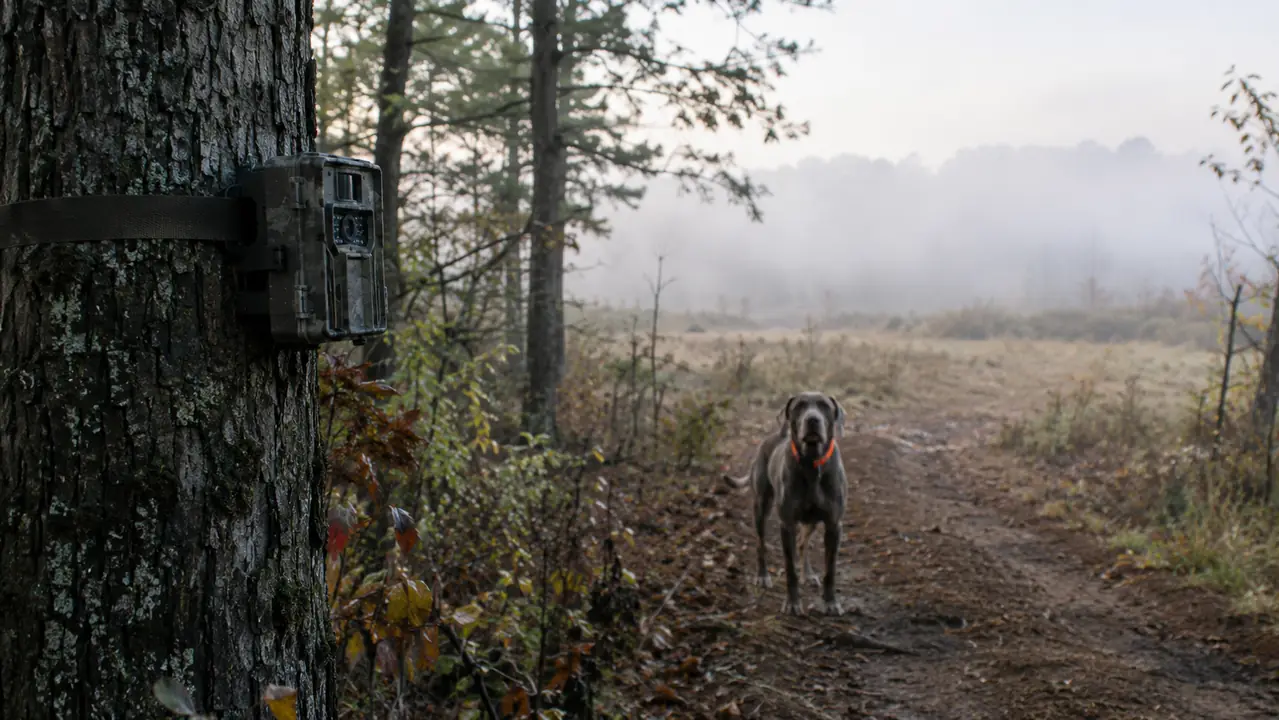
The first Saturday of deer season, I walked a half mile into the oaks on the back side of our family place and pulled the card from a camera I had strapped to a white oak back in August. The screen lit up with 1,100 clips. The buck I had been hunting all month had walked that same trail at 11:40 at night, four nights running, and I had been sitting in the wrong stand every one of those mornings. That is the whole argument for a trail camera, and it is the reason a GardePro A3S has stayed on that ridge since mid August.
I am Cal Brewer, 54, and I hunt whitetail and turkey on family land and on a public wildlife area a few miles from my place in rural Kentucky. When the seasons close, I fish bass, crappie, and catfish from a 14 foot aluminum jon boat on a nearby lake, or right off the bank when I do not want to drag the boat. I do not need the most expensive gear on the shelf. I need gear that still works in the third year. So this is not a first impressions review. It is what happened after running the A3S from mid August through the end of January, six months of Kentucky weather, about 2,400 clips, one flooded creek bottom, and a very wet December.
The Quick Verdict
The A3S is the camera I tell weekend hunters to start with. Clear 1296P video with sound, long battery life, and no monthly bill, at a price that will not make you wince. It is not the fastest trigger on the market and the menus feel dated, but after six months on my ridge it has earned its place.
Amazon Check Today's Price →The camera that showed me where to hang my stand
I ran the GardePro A3S for six months on my ridge, and it changed where I sit on Saturday mornings. See today's price and current buyer ratings on Amazon.
Amazon Check Today's Price on Amazon →How I've Used It
The GardePro A3S has been strapped to a white oak at the head of a draw on our family place since mid August. That spot sits about 40 yards off a field edge, where the deer come out of the timber to feed on soybeans in the fall. I set it up facing the trail, about three feet off the ground, angled down slightly so it catches a deer's chest and head instead of a line of backs. I run it in video mode at 1296P with sound, 30 second clips, and three stills when it triggers. That combination gives me a short video of how the animal moves and a few still frames I can zoom in on to count points.
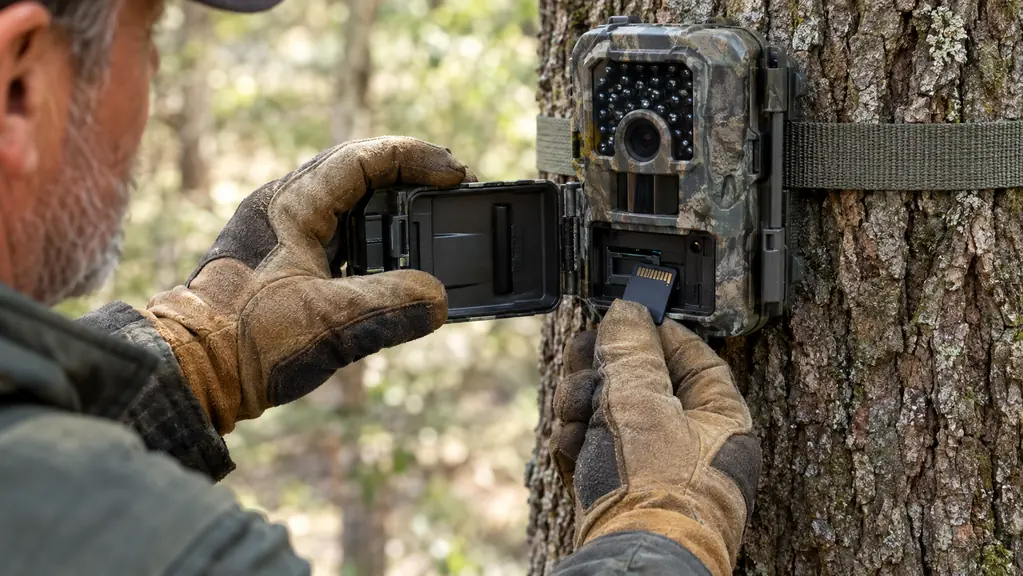
I pulled the card every Saturday from opening weekend through January, about 24 card pulls, most of them before first light with a headlamp. Scout, my seven year old retriever, rides along on every pull and has learned the sound of the latch. The camera went through one full set of eight AA lithium batteries in the first six weeks, which covered about 3,200 triggers from deer, turkeys, raccoons, and one very curious coyote that walked up and sniffed the lens housing. After that I switched to a fresh set of alkalines and it ran another eight weeks before the battery meter dropped below half. For a camera that sits in the woods full time, that is the kind of battery life that makes you stop thinking about batteries.
I also ran the A3S for three weeks on a creek crossing at the public wildlife area, hung about two feet off the ground on a sycamore. That spot taught me the limits of the flash range. The crossing is about 35 feet wide, and the camera caught deer on the near bank clearly. On the far bank, around 50 to 60 feet out, the night clips get grainy and the animals look washed out. Close to mid range, it is sharp. That matches what I expect from an invisible IR camera in this price range, and it is worth knowing before you hang one over a wide field.
What the Video and Stills Actually Look Like
The 1296P video is the reason I keep recommending this camera. On a sunny November afternoon, a clip of a doe and her yearling coming down the trail looks like something you would show a friend without apologizing. The color is natural, the focus holds, and the microphone picks up the crunch of leaves and the rustle of a turkey scratching. That sound matters more than I expected. Hearing a buck grunt off camera before he steps into frame tells you things a silent clip cannot, like when he is moving and how far out he is working.
At night the invisible IR LEDs keep the camera from being seen, and the clips are still usable, though not as crisp as daytime. I have a clip from October 12 of a 6 point buck feeding at the edge of the beans about 30 feet out, and you can make out his rack and body shape clearly. The stills, which the A3S captures at 32 megapixels, are better than the video at night. I zoomed in on one still of that same buck and could count the tine length against a fence post in the background. That is the practical definition of good enough for a guy deciding where to sit on Saturday morning.
One honest complaint on video. When an animal walks straight toward the camera, the auto exposure can blow out the chest and leave the head in shadow. It happens on bright days when the sun is behind the animal, and there is no setting in the field to fix it. I learned to angle the camera across the trail instead of straight down it, and that solved most of the problem.
Trigger Speed: What It Caught and What Got Away
GardePro lists the trigger speed at 0.3 seconds, and my experience backs that up for animals moving across the frame at a normal walk. The clip from November 9 that finally showed me the buck I had been chasing is a good example. He stepped into frame at the edge of the beans, and the camera caught him mid stride with his head up and ears forward. The video starts clean, no cut off feet and no tail end of a deer already gone.
But fast animals beat it sometimes, and you should know that before you buy. Turkeys, especially in the fall when they move at a jog, triggered the camera late enough that some clips are just an empty trail with a blur of feathers leaving the frame. I had the same thing happen with a coyote that crossed at a run. The camera caught it, but the first second of the clip is mostly empty ground. For deer and for turkeys walking and feeding, it is fine. For animals at a dead run across a field edge, a camera with a faster trigger and a wider detection zone would do better, and you will pay more for it.
The time lapse mode is the feature nobody talks about. I set it to take one photo every 15 minutes during the rut on a food plot, and it built a picture of when deer were using the plot that no pile of individual clips could match. The camera ran that way for two weeks on the same batteries. If you are trying to learn a pattern instead of just catching a specific buck, that mode alone is worth the price of the camera.
Battery Life and Six Months of Kentucky Weather
This camera has been through a Kentucky summer, a wet December with nine days of rain in a row, and a January cold snap that dropped to 8 degrees at night. The housing stayed sealed, the card stayed dry, and the camera never once failed to write a clip. The IP66 rating held up exactly as advertised. I also learned a lesson about public land. After the first month I moved the camera to a cheap metal security case with a cable lock, because a camera that sits on public ground will grow legs. That is my advice for anyone running one of these anywhere other than a locked gate.
On batteries, here is the honest math. Eight AA lithium cells got me about six weeks and roughly 3,200 triggers, including some long video clips. A set of alkaline cells ran about eight weeks with lighter activity. If you set the camera to stills only, you will stretch that further. If you run 30 second video clips on a busy trail, do not expect a whole season on one set. I keep two spare sets of batteries in the truck and swap cards at the same time, and the camera has not died on me in the middle of a week since I started treating two bars as empty.
One thing I will flag about the battery meter. It reads in rough bars, not percentages, and it seems to hold at full for weeks and then drop quickly. I learned to treat two bars as the time to swap, not one. The first time I pushed it down to one bar, I pulled the card and found the camera had stopped writing clips two days earlier. Nothing was lost, but a buck walked through a camera that was not recording, and that is the one failure that matters in this whole review.
The Tradeoffs Nobody Mentions
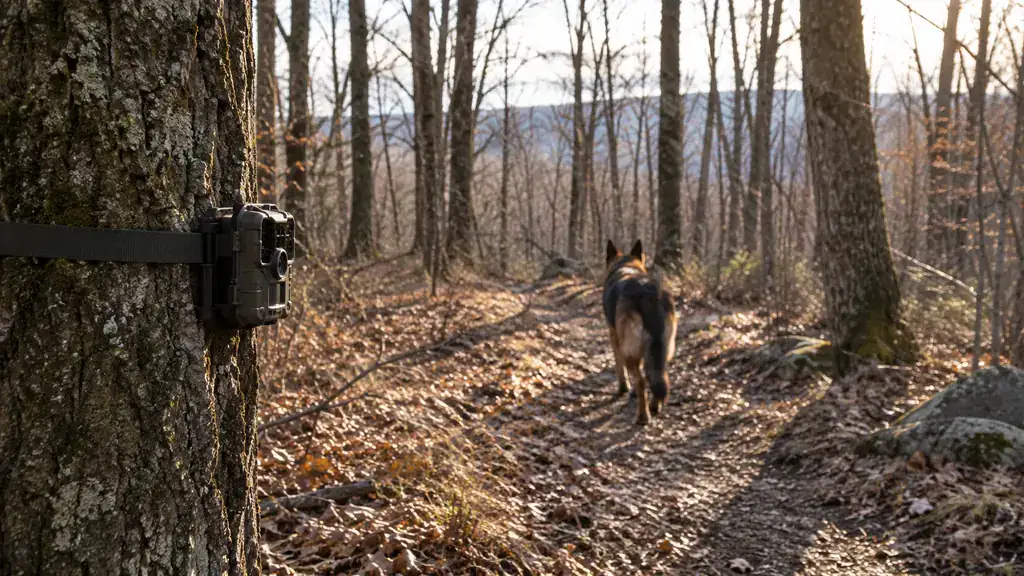
The biggest one is that the A3S is non-cellular. There is no monthly bill and no app, which is exactly why I bought it, but it also means you have to walk to the camera to see what it caught. On our family place that is a pleasant half mile with Scout ranging ahead. On a piece of public land an hour from the house, it is a whole morning. If you need photos delivered to your phone while you are at work, this is not that camera, and you should be looking at a cellular model instead.
The menus and buttons are functional but dated. You scroll through options with two buttons on the bottom of the unit, and the font is small. I set the camera up once and mostly left it alone, so it was not a problem for me. But if you like to change settings every time you move a camera, the interface will test your patience. The manual in the box is thin, too. I figured out the time lapse and multi shot modes by trial and error, and I am still not sure I have seen every menu on this thing.
The included strap works fine on a tree six to eight inches in diameter, but it is short for big timber. I have the camera mounted on a white oak that is about 18 inches across, and the strap just barely reaches. On a bigger tree you will want a longer strap or a mounting bracket. Also, the camera takes standard SD cards up to 512 gigabytes, but I found it writes most reliably to 32 gigabyte cards. I run 32 gigabyte cards in all the cameras I use now, and I have not had a single card error since.
What I Liked
- 1296P video with sound that is genuinely usable in daylight and at night
- Long battery life, roughly six to eight weeks on a set of eight AAs on a busy trail
- No monthly bill, no app, no signal required, set it and leave it
- Time lapse mode is excellent for learning when deer move
- Solid build that survived a full Kentucky winter, including nine straight days of rain
Where It Falls Short
- Non-cellular, so you have to walk to the camera to see any clip
- Fast moving turkeys and running coyotes sometimes beat the trigger
- Menus and buttons feel dated and the manual is thin
- Night flash range fades past about 50 feet in open areas
- Battery meter reads in vague bars and drops fast once it starts moving
The buck I had been hunting all month had walked that same trail at 11:40 at night, four nights running, and I had been sitting in the wrong stand every one of those mornings.
Who This Is For
If you are a weekend hunter who wants to know what is moving on your property without spending a fortune or signing up for a data plan, the A3S is for you. It is the right camera for a first trail camera, for a guy who wants to run several of them across a farm, or for someone tired of cameras that eat batteries. It is also a good pick for anglers who want to keep an eye on a creek or a lake access point between trips, because it will sit for weeks and still be ready when you come back.
In my truck right now there is a case with the A3S and a spare, a handful of 32 gigabyte cards, and a spare pack of AAs. That is the setup I grab on the way out the door, and it has not let me down in six months.
Who Should Skip It
If you need photos on your phone while you are at work, skip the A3S and buy a cellular camera. There is no way around the walk, and no amount of picture quality makes up for driving an hour to find out nothing showed up. If you hunt wide open fields where the action is 60 to 100 yards out at night, the invisible IR range will disappoint you. And if you are the kind of guy who wants to dial in settings from an app in your recliner, the button menus will frustrate you. None of that makes it a bad camera. It just makes it the wrong camera for those jobs.
Six months on my ridge and still running
The GardePro A3S is the non-cellular trail camera I recommend to weekend hunters who want clear clips and long battery life without a monthly bill. Check today's price and current buyer ratings on Amazon.
Amazon Check Today's Price on Amazon →