

The first rod I ever bought with my own money came from a bargain bin, and it let me down before the summer was over. The reel seized up on a catfish trip, and I drove home convinced that cheap gear was always a waste. So when the KastKing Centron started showing up in every budget gear conversation, I'll admit I rolled my eyes. I've been fishing one for close to a year now, and I think I owe the budget category an apology.
This is the KastKing Centron Fishing Rod and Reel Combo, sold in both baitcaster and spinning versions, and it sits at a price that usually makes me suspicious. I'm not going to tell you it fishes like a rod that costs three times as much, because it doesn't. But for weekend anglers who chase bass, crappie, and catfish from the bank or a small boat, it does something more useful. It gives you a dependable rod you can grab without worrying that you wasted the money.
The Quick Verdict
The Centron is the rare budget combo that earns its keep. It casts well, fights bass and catfish with a smooth drag, and holds up to a year of bank and boat fishing. Just know the reel is a budget reel, and the baitcaster version wants some practice before it shines.
Amazon Check Today's Price →A Budget Combo That Earned Its Spot in My Boat
I've spent close to a year fishing the KastKing Centron from the bank and out of my 14-foot jon boat. It has handled bass, crappie, and catfish without complaint, and it's the combo I hand to friends who want gear that works.
Amazon Check Today's Price on Amazon →How I've Used It
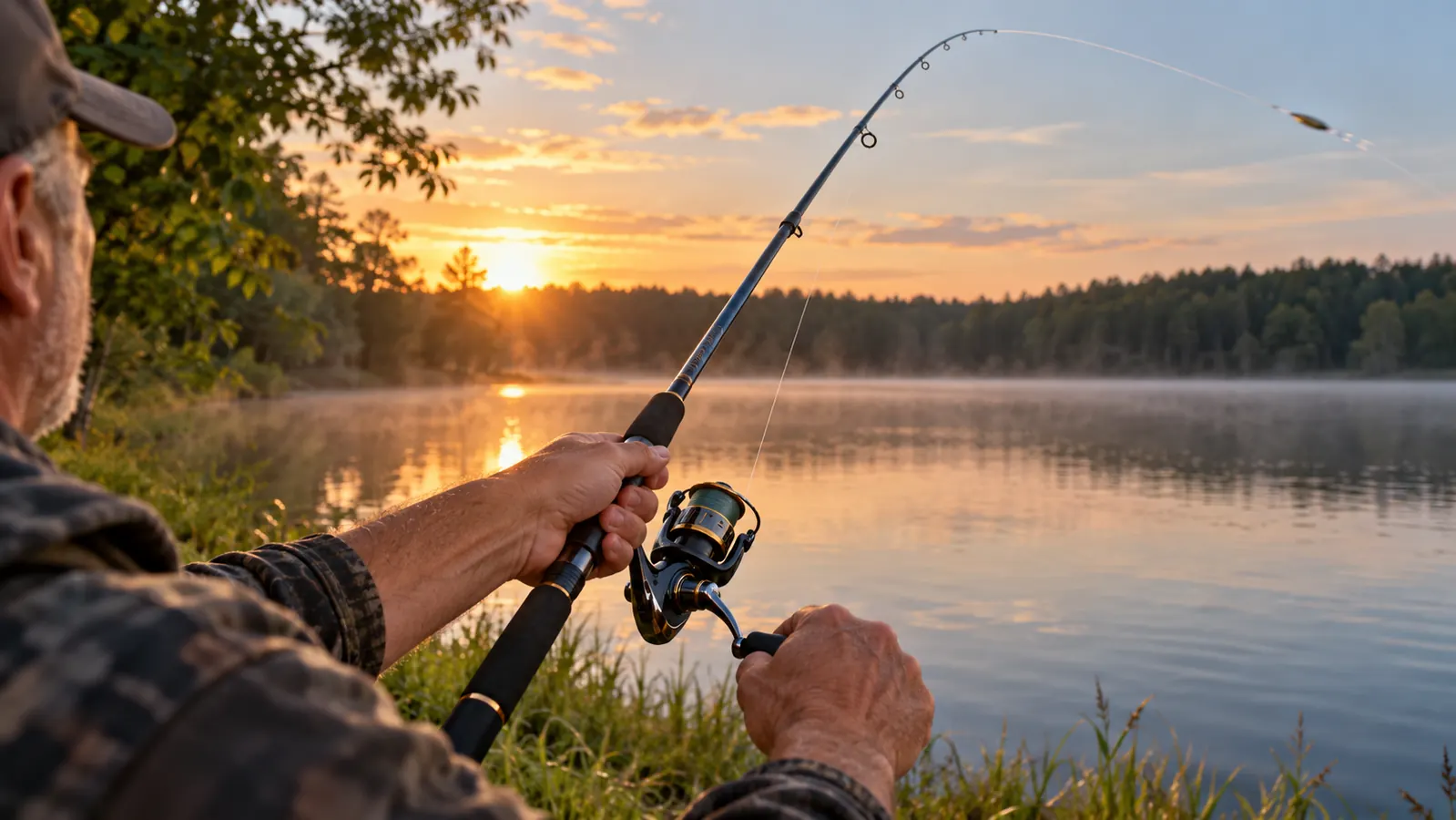
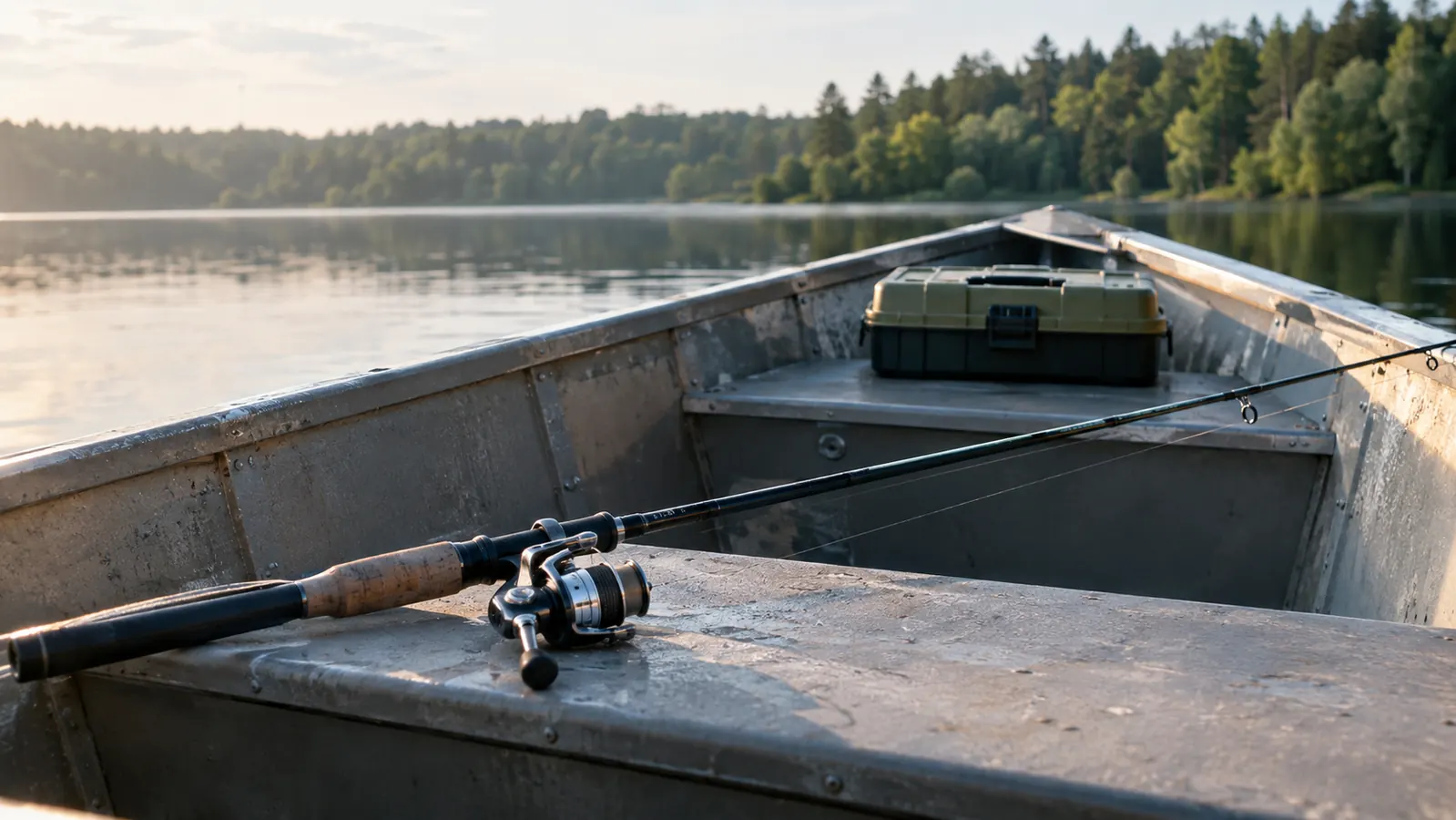
I've had my Centron spinning combo since early last spring, and it has spent most of that time in the rod locker of my 14-foot aluminum jon boat or leaning against the tailgate of my truck at the lake. I fish a nearby lake from the bank a couple of evenings a week after my maintenance job lets out, and on weekends I run the jon boat out to the weed lines and stump beds for bass. Scout, my retriever, rides along on most trips, and he's learned to stay clear of the backcast. The Centron has caught bass, crappie, bluegill, and more catfish than I bothered to count, including a channel cat that gave the drag a real workout.
I also put the combo through turkey season last spring. It rode behind the seat of my pickup on the way to the wildlife area, and I kept it rigged with a jerkbait so I could grab a quick hour on the water when the morning hunt went quiet. The rod is light enough to carry one-handed while you're toting a turkey vest and a decoy bag, which matters more than you'd think when you're walking a half mile back to the truck.
The baitcaster version belongs to my buddy, and he's been willing to learn it the hard way. He bird's-nested it twice in the front yard before he backed off the brake and slowed his thumb. Once he got the hang of it, he switched to flipping soft plastics into heavy cover and hasn't gone back. I'll be honest that most of my time has been on the spinning version, so that's what I'll focus on. But the baitcaster has earned its place in his rod locker too.
What the Centron Combo Actually Is
The Centron is KastKing's entry-level rod and reel combo, and it comes in two flavors: a baitcaster and a spinning version. Both pair a graphite composite rod with a reel that packs more bearings than you'd expect at this price point. The reel runs a 5.2:1 gear ratio, which is a sensible middle ground for the fishing most of us do. You get a dependable drag, a smooth enough retrieve, and enough line capacity to cover everything from light crappie line to heavier catfish setups.
The rod is what surprised me most. It's not a noodle. There's enough backbone to set a hook through a bass's mouth at 20 feet, and the tip loads up nicely when you're casting a light lure. The guides are stainless steel, which matters to me because I fish around bank brush and occasionally drag a rod across the bottom of the jon boat. I've had cheaper rods lose a guide insert in the first month. That hasn't happened here.
The combo also comes in several lengths, and I run the 7-foot spinning rod because it gives me better casting distance from the bank while still fitting across the gunwales of the jon boat. If you fish from a kayak or work tight creeks, a shorter version will handle better. The handle is comfortable for a full day on the water, and the reel seat hasn't loosened on me, which is a complaint I've had with other budget combos.
How It Performs on the Water
Casting is where a budget combo usually gives itself away, and the Centron is better than it has any right to be. From the bank, I can put a quarter-ounce spinnerbait right where I want it, under the overhanging limbs on the far side of a cove. The rod loads smoothly, and the reel lays line on the spool evenly, so I don't get the uneven wind that causes wind knots and backlash on cheaper reels.
Fighting fish is where the combo really earns its keep. A 3-pound bass on a 7-foot rod with this drag is a lot of fun. Last fall I landed a 5-pounder on a crankbait, and I've taken catfish up to 12 pounds without the drag ever sticking. The drag washers are smooth enough that I never felt the line about to break, which I cannot say for the reel that came on my first rod. For crappie, the light tip gives you enough feel to detect a subtle bite, and the rod still has enough guts to turn a bigger bass when one grabs your minnow.
The baitcaster version, from what I've watched my buddy do with it, is a decent learning tool. It's not a tournament-level casting reel, and you will have to fiddle with the brake and spool tension. But once it's dialed in, it flips baits into cover accurately and handles fish in the 2- to 5-pound range without drama. If you're new to baitcasters, plan on a practice session in the yard before you take it on the water.
Baitcaster or Spinning: Which Version to Pick
If you're trying to decide between the two versions, here's my honest take after a year of watching both. The spinning version is the easier daily driver. It casts light lures better, it's harder to tangle, and you can hand it to a guest without a five-minute lesson. If you're buying one combo for a mix of bank fishing, crappie jigging, and catfish trips, I'd start with the spinning version.
The baitcaster version is the one to pick if you already know you want to learn casting reels or if you spend most of your time flipping and pitching baits into cover. The learning curve is real, and I've seen grown men cuss this reel in a front yard. But once you set the brake for the lure weight you're throwing, it's accurate in a way a spinning reel isn't. My buddy uses his for soft plastics around laydowns, and he lands fish that would have dragged a spinning setup into the brush.
One more thing on this: buy the version that matches the fishing you actually do, not the fishing you see on TV. If you mostly fish from the bank with light lures for crappie and bass, the spinning version is the right call. If you're set on mastering a baitcaster because you want to pitch into thick cover from a boat, get the baitcaster and give yourself a weekend to learn it. Both versions share the same quality story, so you're not giving up anything either way.
What Wears Down First
After close to a year of use, the honest answer is: not much, but a few things remind you this is a budget combo. The first thing I noticed is that the finish on the reel is thin. It's purely cosmetic, but if you rest the reel on the gunwale or drag it across a gravel bank, you'll see scuffs. I don't baby my gear, and the scuffs don't affect how it fishes. But if you like your gear to stay pretty, you'll want to be a little careful with this one.
The drag is the other thing to keep an eye on. It's been smooth and reliable for me, but I fish mostly freshwater with line in the 8- to 12-pound range, so I'm not taxing it the way a saltwater angler would. I would not buy this combo for saltwater duty, full stop. The guides are stainless, but the reel isn't sealed, and salt will find its way into the drag and the bearings. For freshwater weekend use, it's been dependable. For anything else, spend more money and get more reel.
The other thing I'd mention is upkeep, because it's part of the long-term story. I rinse the reel with fresh water after dusty trips, and I loosen the drag when I put the combo away for the winter. A drag left cranked down all season can take a set, and you'll feel it the next spring as a sticky start. That's true of any reel, but it matters more on a budget reel with simpler washers. I've also noticed the handle knob has developed a tiny bit of play after a season. Nothing that affects casting or reeling, and the kind of thing you'd expect at this price. I mention it because an honest review should tell you where the corners are cut, and that's one of them.
I've landed a 5-pound bass and a 12-pound channel cat on this combo, and the drag never stuck once.
The Tradeoffs You Should Know About
The biggest tradeoff is the reel. It's a good budget reel, but it's still a budget reel. The retrieve isn't as silky as a reel that costs twice as much, and the baitcaster's brakes need adjustment when you switch between light and heavy lures. If you're used to high-end gear, the Centron will feel a little rough around the edges. If you're coming from a bargain special you've been fighting for years, it will feel like a big step up.
The other tradeoff is the combo nature of the thing. You can't buy the rod and reel separately, which means you're locked into KastKing's pairing. For most weekend anglers, that's fine, because the pairing is sensible. But if you already own a favorite reel you want to put on a specific blank, you're better off buying the pieces separately and spending more. The Centron is a value play, not a customization platform.
The last tradeoff is feel. A premium rod transmits every pebble tap and current tick through the blank, and the Centron doesn't do that. It's a touch numb, especially in the lower third of the rod. For the fishing most of us do, that doesn't cost you anything. But if you've spent time with a high-end blank, you'll notice the difference on the first cast, and you should know that going in.
What I Liked
- Casts and fights well above its price point
- Smooth, dependable drag for bass, crappie, and catfish
- Graphite composite rod has real backbone
- Available in both spinning and baitcaster versions
- Stainless guides hold up to bank-fishing abuse
Where It Falls Short
- Reel finish scuffs easily
- Baitcaster takes patience to dial in
- Not built for saltwater
- Rod and reel can't be bought separately
Who This Is For
The KastKing Centron is for the weekend angler who fishes a few times a month and wants gear that works without a lot of fuss. It's for the person who needs a dependable second rod in the boat, a loaner rod for a buddy, or a first baitcaster to learn on without dropping serious money. If you fish bass, crappie, bluegill, or catfish from the bank, a dock, or a small boat, this combo will do everything you ask of it. At 54, I've owned enough rods to know that most of us don't need a premium reel. We need something that casts, fights, and holds up. That's what this is.
Who Should Skip It
Skip the Centron if you fish saltwater, if you're a tournament angler who needs a high-end reel, or if you want to build a rod and reel setup piece by piece. If you already own a rack of premium combos, this isn't going to replace them. And if you're brand new to baitcasters and don't have the patience to learn the brakes, start with the spinning version or plan on some practice time. This is an honest value combo, not a do-everything rod, and it's best for people who know exactly what they're getting.
My Pick for a Dependable Weekend Combo
After a year of bank fishing, jon boat trips, and truck-bed miles, the KastKing Centron is the budget combo I hand to friends who want gear that just works. It won't replace a premium setup, but it doesn't pretend to.
Amazon Check Today's Price on Amazon →