
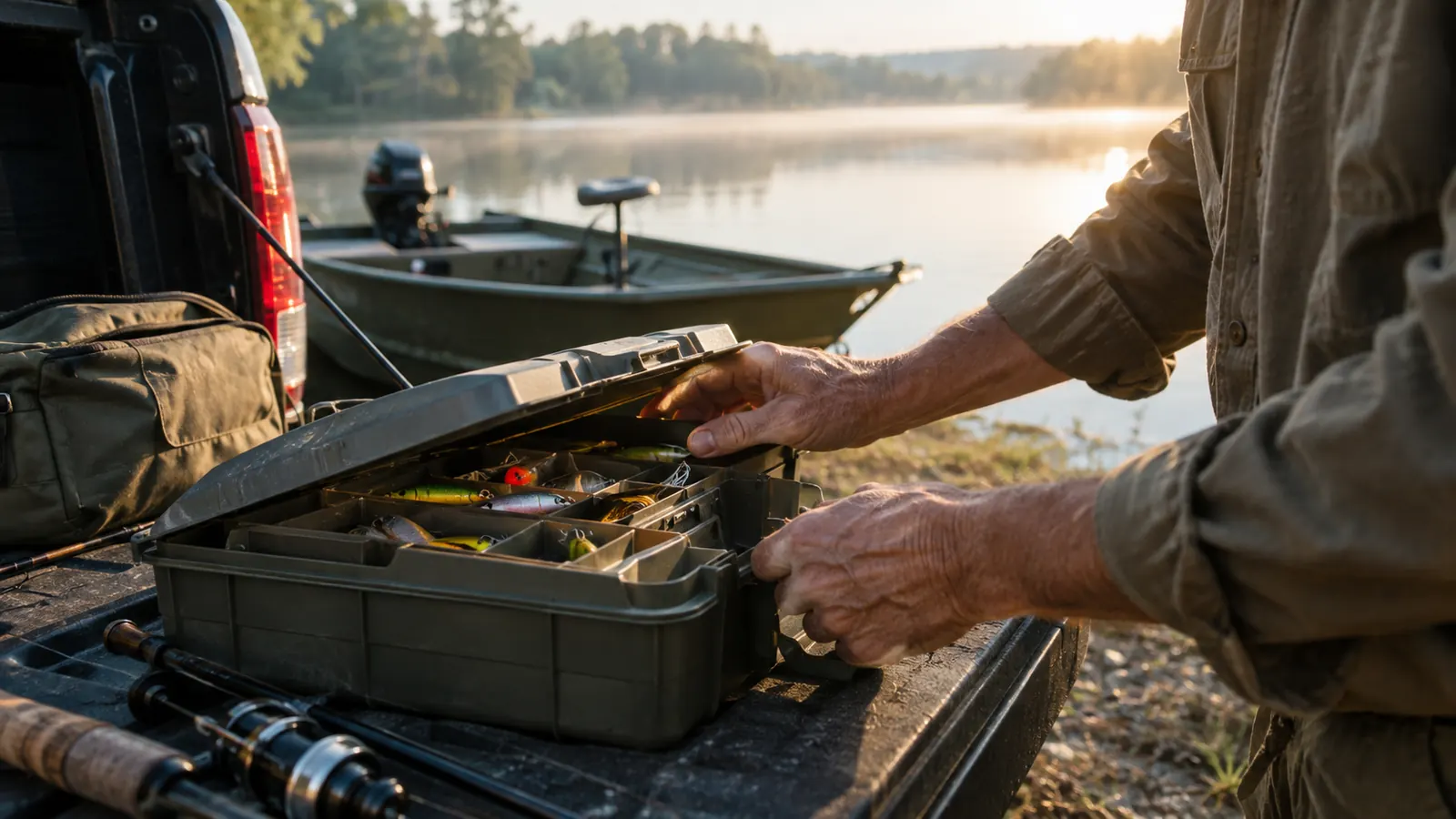
I bought the PLUSINNO 137-piece tackle kit two springs ago for one simple reason: I was tired of digging through five old boxes to find a hook that was not rusted. I am 54, I fish bass, crappie, and catfish from a 14-foot aluminum jon boat or from the bank, and I hunt deer and turkey on family land in Kentucky when the seasons roll around. I do not own a bass boat, and I do not buy gear that needs a second mortgage. I wanted one box that could ride behind the seat of my pickup, survive being dropped on a gravel ramp, and cover most of what I do on the water. After two full seasons, maybe forty trips, and one accidental swim, here is how the PLUSINNO kit has actually held up.
The Quick Verdict
A practical all-in-one tackle box that has earned its place behind my truck seat for two full seasons, with honest limits on hooks and soft plastics.
Amazon Check Today's Price →The box I reach for before every trip: see today's price on Amazon
If you want one tackle box that covers bass, crappie, and catfish without a second box of odds and ends, this is the kit that has earned a permanent spot behind my seat. Check the current price and decide if it belongs in your truck too.
Amazon Check Today's Price on Amazon →How I've Used It
For the last twenty months, the kit has lived behind the passenger seat of my truck in a milk crate with my rain jacket and a pair of rubber boots. On a typical Saturday in May, I load the crate into the 14-foot jon boat, push off from the ramp before sunrise, and fish points and laydowns until the sun gets high. Scout, my seven-year-old retriever, rides on the front bench and watches the rod tips. The box has been stepped on, knocked over, splashed, and left in a hot truck for a full workweek. It has also been opened and closed hundreds of times, because the whole point of a kit like this is that you do not have to think about what to grab.
My usual setup is a medium-action spinning rod with eight-pound monofilament. The PLUSINNO kit gives me enough options to switch from a shallow crankbait in the morning to a weighted worm in the afternoon without going back to the truck. For catfish, I swap the treble hooks for a circle hook and add a bank sinker from the weight assortment. For crappie, I tie on a small spoon or a jig head with a curly tail grub. The kit does not make you a better angler, but it removes the excuse of not having the right piece when the bite changes.
I also use it on hunting trips. When turkey season opened in mid-April, the kit stayed in the truck because I wanted the hooks and weights for an afternoon of fishing after I came out of the woods. The box closes quietly, which matters when Scout is in the cab and I do not want a rattling latch spooking a gobbler on the way to the blind. The latch does not rattle. That sounds like a small thing, but it is the difference between leaving the box at home and taking it with you.
What's Actually in the 137-Piece Kit
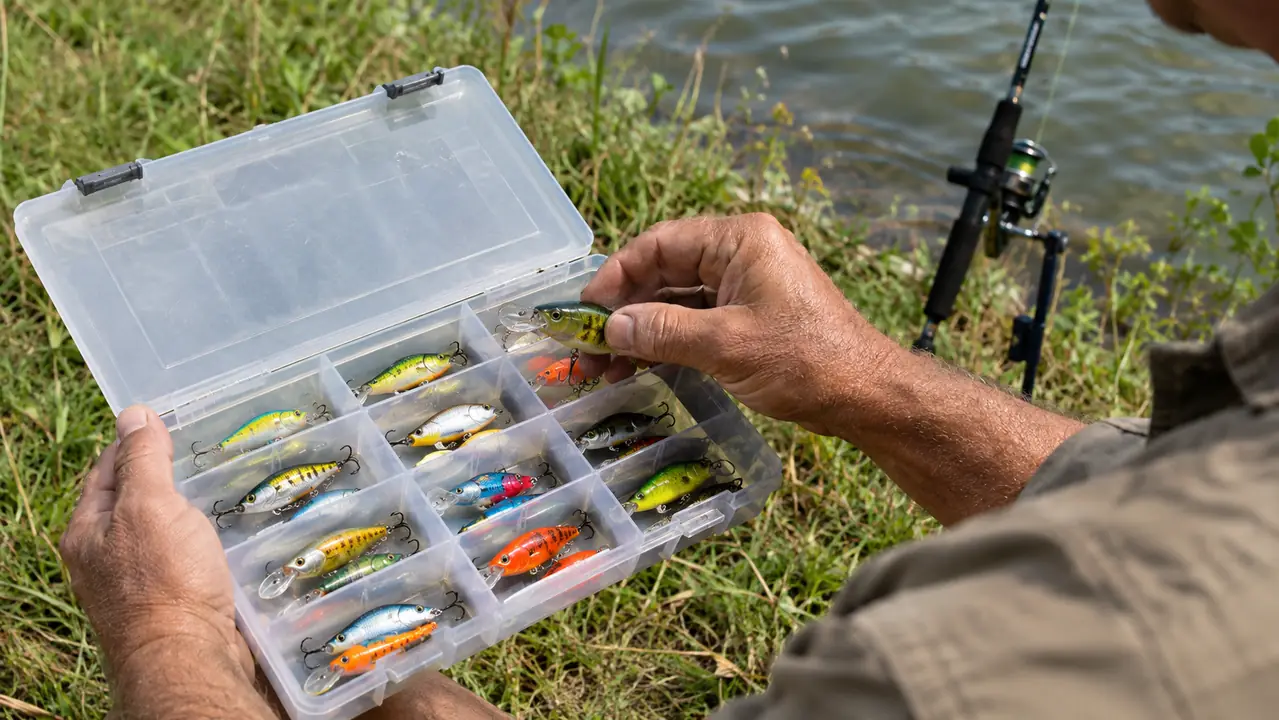
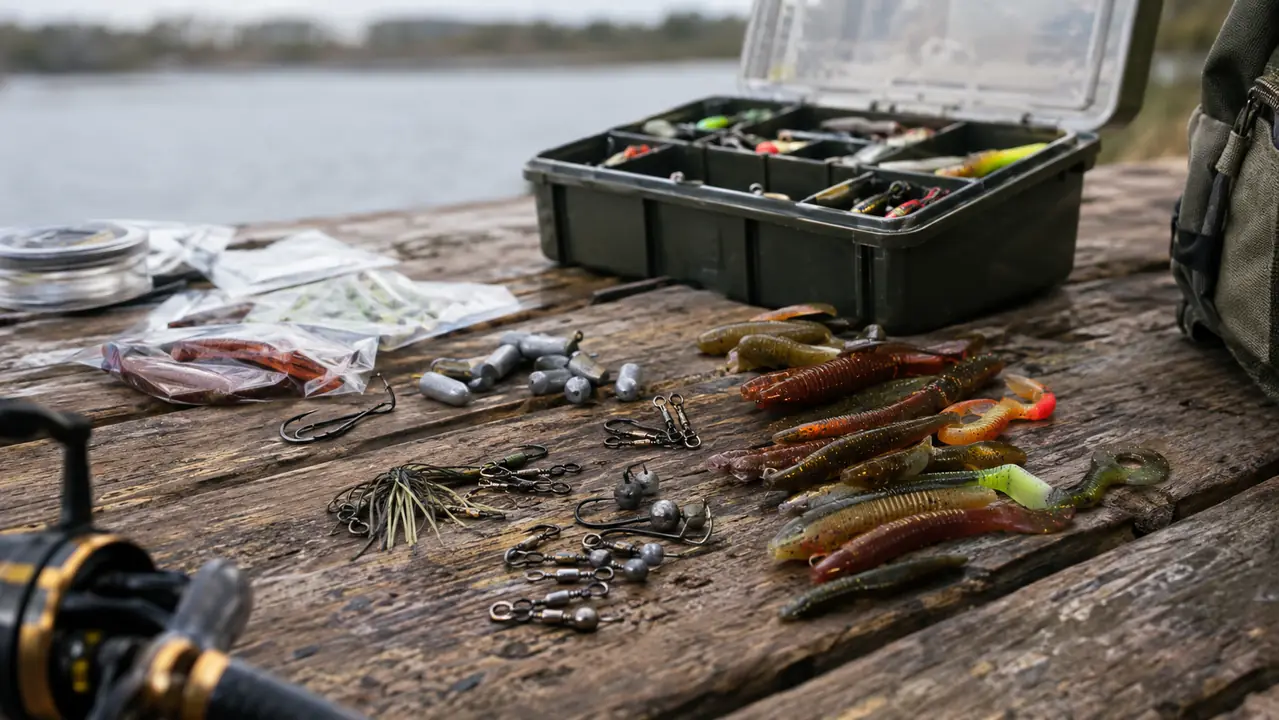
The kit comes with 137 pieces, and I counted them when it arrived because I do not trust package labels. The breakdown is about what you would expect from a starter kit: a few shallow-running crankbaits, a couple of metal spoons, a small spinnerbait or two, an assortment of hooks from small panfish sizes up to larger bass hooks, split shot and bank sinkers, barrel swivels, snap swivels, a few floats, and a tray of soft plastic worms and curly tail grubs. The box itself has five divided trays, and the top tray lifts out so you can reach the bottom without dumping everything onto the floorboard.
The hard baits are the best part. The crankbaits track true out of the package, and the paint jobs have held up better than I expected after bouncing around in the tray for two seasons. One of the spoons has caught more crappie than anything else in the kit. The hooks are sharp enough out of the package, but I sharpen the larger ones before I use them, because mass-produced hooks are never as sharp as I want them. The soft plastics are usable, but they are not the same quality as the bags of worms I buy at the bait shop. They work, they just do not last as long. I go through them faster, especially when the white bass are schooled up and biting short.
One thing that surprised me is how much variety you get for the money. There are enough hooks and weights in the kit to restock a bank bag several times over. I keep a small pouch of the most-used hooks in my vest, and the rest stay in the box. The kit is not a replacement for specialty tackle, but it is a better starting point than a single pack of hooks and a bag of worms.
How It Performed for Bass, Crappie, and Catfish
On the bass side, the kit has accounted for most of my keepers this year. In late April, I fished a point on the lake with a shallow crankbait from the kit and landed a 3.2-pound largemouth, which is a solid fish for this lake. The crankbait ran about four feet deep on eight-pound line, and it did not roll or spin. On days when the bass wanted a slower presentation, I rigged one of the soft plastic worms on a weighted hook and worked it along the bottom. The hookup ratio was fine, though I did lose one fish when a worm slid up the hook on a long cast.
For crappie, the small spoons and jig heads have been the standouts. In May, I took a limit of crappie from a brush pile in about nine feet of water using a curly tail grub from the kit on a quarter-ounce jig head. The grub was not as durable as the premium brand I usually buy, but it caught fish, and I had plenty of backups in the tray. For catfish, the kit is less about the lures and more about the terminal tackle. The bank sinkers and circle hooks have handled channel cats up to about eight pounds, and the snap swivels make it easy to change rigs without retying in the dark.
The kit will not replace a serious bass angler's wall of tackle, and it is not designed to. It is designed to give a weekend angler one box that covers the basics for several species. That is exactly what it has done for me. I have caught fish on nearly every hard bait in the kit, and the terminal tackle has not let me down yet. For a guy who fishes from the bank or a small boat, that is the whole job.
How the Tackle Box Itself Holds Up
The box is the part I did not expect to be as good as it is. The latch still snaps shut with a clean click, the hinges have not loosened, and the trays slide in and out without binding. I have dropped it on concrete, kicked it across the boat deck, and left it in the bed of the truck during a thunderstorm. The only damage after two seasons is a hairline crack in one corner of the top tray, and that came from stepping on it while the box was closed. The crack does not affect the latch, and the tray still holds its contents.
The one time I thought I had lost it was in early June, when the box slid off the rear deck of the jon boat and into about three feet of water. It floated for a few seconds, which surprised me, and I grabbed it before it sank. I opened it on the bank and dumped out the water. The hooks had a little surface rust after that, and one of the split rings on a crankbait stiffened up, but everything else dried out fine. I would not call the box waterproof, and I would not leave it out in a downpour, but it handled an accidental dunking better than I expected.
One hot July week, I left the box in the truck for five days with the windows up. The plastic trays got warm enough that the soft plastics went a little soft, but the box itself did not warp. I now take the soft plastic tray inside on hot weeks. That is the kind of maintenance any tackle box needs.
How I Pack It for a Day on the Water
Packing matters more than the kit itself. I keep the most-used pieces in the top tray: the small spoons, a few jig heads, and the curly tail grubs. The middle trays hold the crankbaits and spinnerbaits. The bottom tray holds the hooks, weights, swivels, and floats. That way I can open the box on the boat deck and find what I need without pawing through everything.
I also added a small piece of foam to the bottom tray to keep the hooks from sliding around, and I replaced the split rings on two crankbaits with stronger ones. Those are cheap fixes, and they made the kit work better for the way I fish. If you are the kind of person who leaves gear exactly the way it came, the kit will still work, but a little rearranging goes a long way.
The box also fits inside a five-gallon bucket, which is how I carry it to the bank. The bucket holds the kit, a spool of line, a pair of pliers, and a stringer. When I am in the jon boat, the bucket sits under the front bench, out of the way. That setup has worked for two seasons, and I do not see myself changing it.
What I'd Change After Two Seasons
No piece of gear is perfect, and this kit has three honest shortcomings. The soft plastics are the weakest link. They catch fish, but they tear more easily than the premium brands, and the worms in the kit are not as supple as the ones I buy in a bag. The hooks are sharp enough for most days, but they are not the kind of hooks I would trust for a trophy fish without sharpening them first. And the kit is bass-heavy. If you fish mostly for panfish or trout, you will use only a fraction of what is in the box.
The other thing I would change is the lack of any kind of line. The kit includes lures, hooks, weights, swivels, floats, and soft plastics, but no fishing line. That is not a knock against the kit, because nobody expects line in a lure kit, but it is worth knowing before you buy. You will still need a spool of monofilament or fluorocarbon, a pair of line cutters, and a rod and reel. The kit is a great starting point, not the whole rig.
I also wish the trays were a little deeper. The bottom tray holds the larger crankbaits, but the hooks on the trebles occasionally catch on the divider when I slide the tray out. It is a minor annoyance, not a deal breaker, and it has never cost me a fish. If you are the kind of person who organizes every hook by size, you will probably rearrange the kit the first week, just like I did.
What I Liked
- Everything you need for bass, crappie, and catfish in one box
- Hard baits track true and the paint holds up
- Box survives drops, splashes, and a dunking
- Latch is quiet and secure
- Saves money compared with buying each piece separately
Where It Falls Short
- Soft plastics tear more easily than premium brands
- Hooks need sharpening before serious use
- Bass-heavy selection, not ideal for panfish or trout
- No fishing line included
- Top tray can catch treble hooks when sliding
I have not bought a hook, weight, or swivel since the PLUSINNO kit arrived, and I fish at least two weekends a month.
Who This Is For
The PLUSINNO kit is for the weekend angler who wants one box that does most of the job. If you fish a few times a month, keep your gear in the truck, and target whatever is biting, this kit saves you from owning five half-empty boxes. It is also a good choice for a new angler, a kid getting started, or someone who wants a backup kit to keep at the cabin. If you mostly fish from the bank or a small boat, the size is right, and the assortment covers the species most of us actually chase.
It is also a smart buy for hunters who fish between seasons. I take the kit on turkey and deer trips because it takes up almost no room behind the seat, and it means I can stop at a pond on the way home without stopping at a bait shop. Scout rides along, the box stays quiet, and I am ready for whatever the day turns into.
Who Should Skip It
Skip the PLUSINNO kit if you are a serious bass tournament angler with a tackle bag full of specialty crankbaits. You already have better versions of most of what is in this box, and the soft plastics will not meet your standard. Skip it if you fish almost exclusively for trout or panfish, because you will use maybe a third of the contents. And skip it if you want premium hooks and premium soft plastics right out of the package. This is a practical, budget-minded kit, not a tackle shop in a box.
The kit also is not ideal if you need something waterproof. The box is water-resistant in practice, but it is not a sealed dry box. If you plan to leave it in the bottom of a boat that takes on water, or you fish in heavy rain every weekend, you will want to keep the kit in a dry bag or a plastic tote. For the rest of us, the trade-off is worth it.
The one box that has earned a permanent spot behind my seat
After two seasons and forty trips, the PLUSINNO 137-piece kit is still the first thing I grab on the way out the door. See today's price on Amazon and decide if it belongs in your truck too.
Amazon Check Today's Price on Amazon →