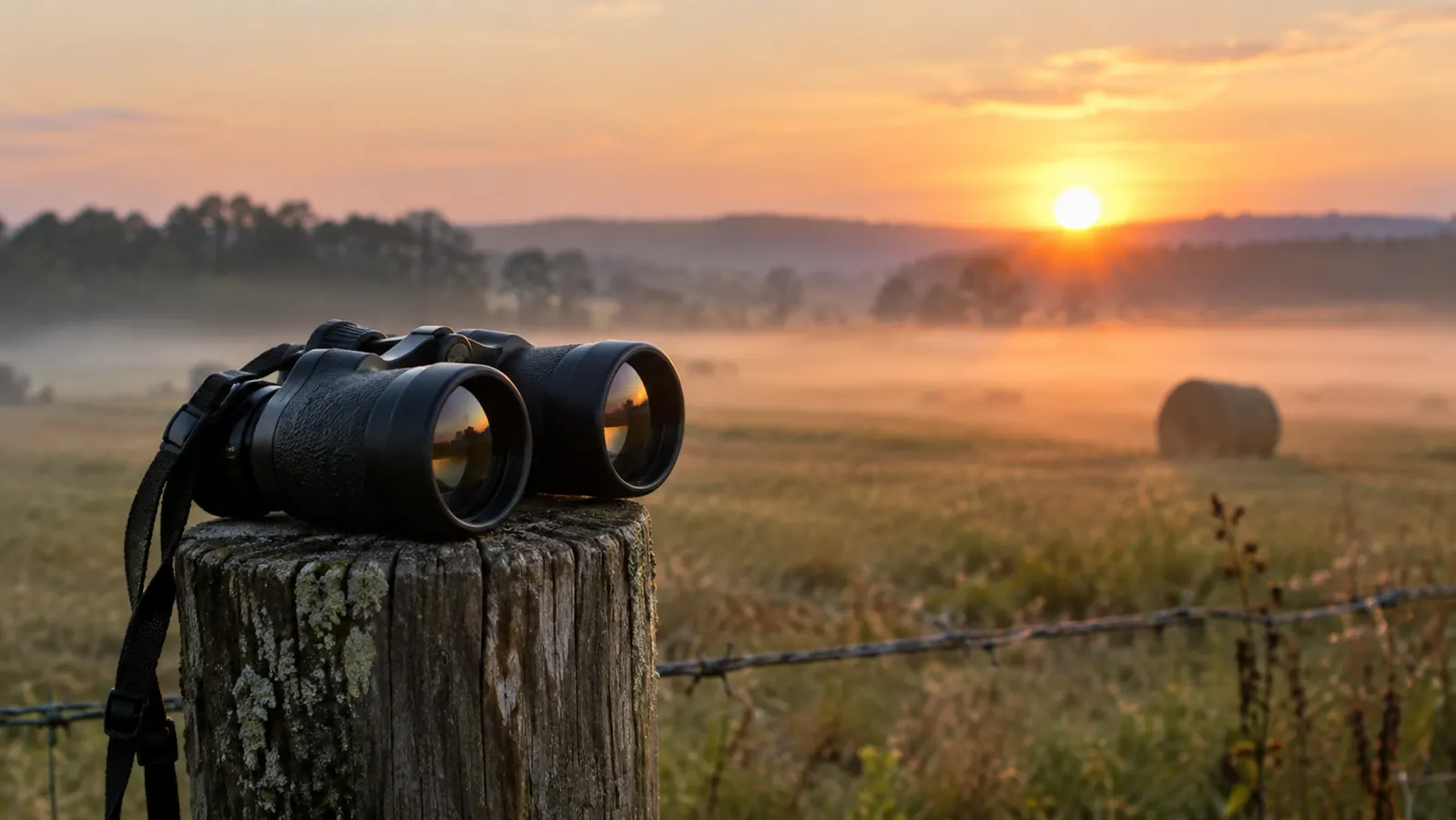
If you are trying to decide between the Vortex Crossfire HD 10x42 and the Nikon Prostaff P3 10x42, you have probably read the spec sheets and come away more confused than when you started. I was in the same spot last fall, so I did the only thing that made sense: I bought the Vortex, borrowed the Nikon from a buddy, and carried both through a full deer season. I am Cal Brewer, 54, from rural Kentucky. I hunt whitetail deer and turkey on family land and a public wildlife area, and I fish bass and crappie from a 14-foot jon boat the rest of the year. I glass from a ladder stand on the back edge of the family property and from a ground blind on the public area, so I have learned that a binocular earns its keep in the last 20 minutes of shooting light. The short version of what I learned is this: the Nikon is lighter and its glass is right there with the Vortex, but the Vortex is the one I would buy again, and the reason has as much to do with the warranty and the focus knob as with the optics.
Here is the short answer. If you want the easiest carry in this class, buy the Nikon Prostaff P3. If you want one binocular that will never cost you money again after the first purchase, buy the Vortex Crossfire HD. The Nikon wins the weight argument by a clear margin. The Vortex wins everything else that matters to me: cold-weather handling, eye relief with glasses, the transferable lifetime warranty, and the way the rubber armor stays put in a gloved hand. Neither one will embarrass you in the field. But after a month of switching back and forth, the Vortex earned the passenger seat of my pickup, and the Nikon went back to my buddy.
| Vortex Crossfire HD | Nikon Prostaff P3 | |
|---|---|---|
| Glass quality | HD extra-low dispersion glass, bright and sharp in the center | ED glass, very close, slightly brighter in flat gray light |
| Weight and balance | A bit heavier, but it feels planted in the hand | Noticeably lighter on a long walk |
| Focus knob in cold weather | Smooth, firm drag, easy with gloves on | Fast and light, a little loose below freezing |
| Eye relief with glasses | Generous, full image with sunglasses on | Usable, but I had to seat the eyecups carefully |
| Warranty | VIP lifetime warranty, transferable, no receipt needed | Good limited lifetime warranty, tied to the original owner |
| Cost | Sells in the same range as the Nikon at most retailers | Usually priced near the Vortex when on sale |
| Best for | Hunters who want one binocular they will never replace | Hikers and walkers who count every ounce |
How I Compared Them
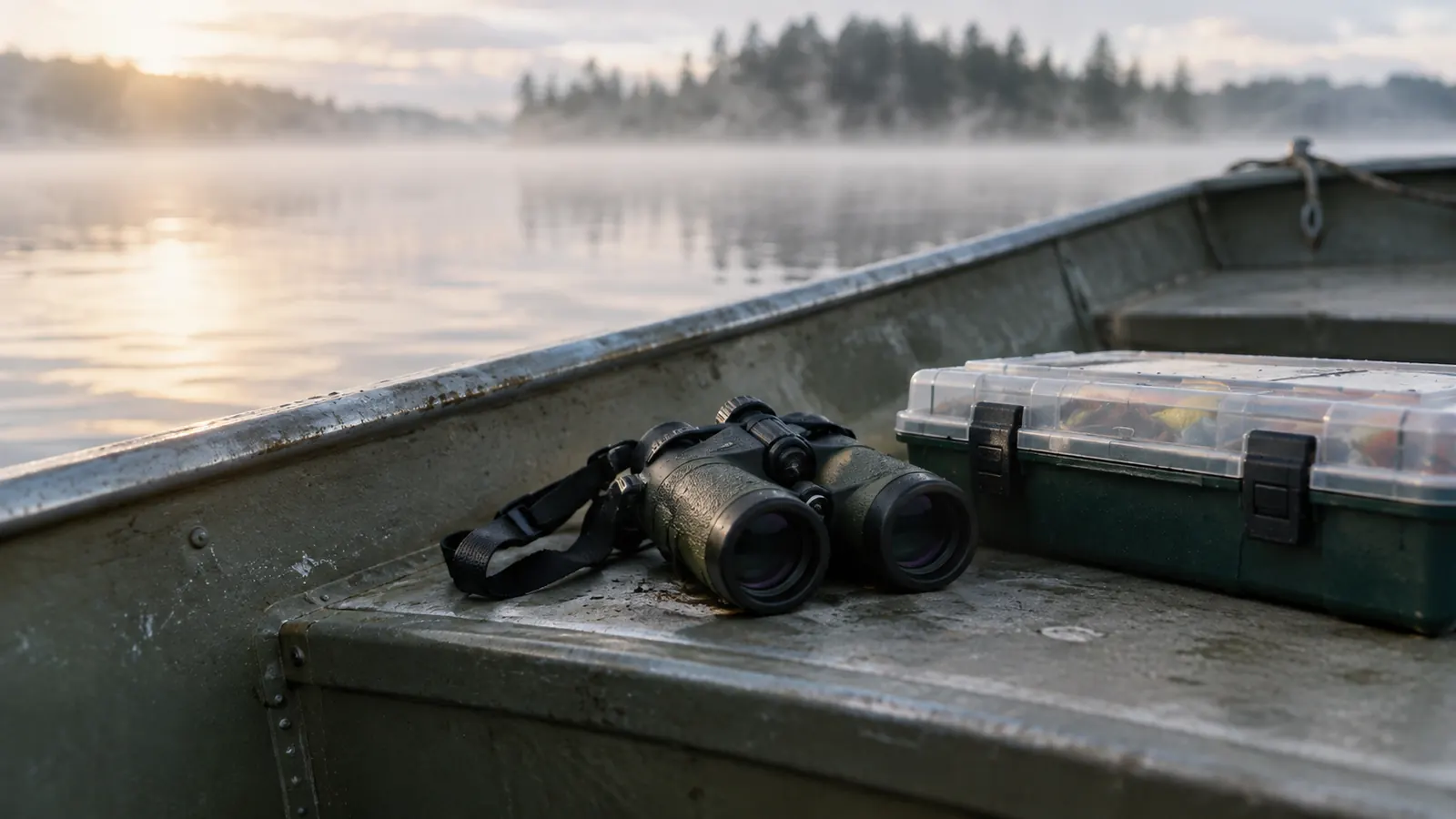
I did not test these on a bench in a store. I carried them. From mid-October through the end of December, I kept one pair in the truck and the other in the house, and I switched them every few days. That covered muzzleloader season, most of the modern gun season, and a handful of turkey scouting walks in January. I also took both out on the jon boat twice, once in late November for crappie and once in early December for bass, which is where binoculars take the worst abuse: morning mist, spray off the trolling motor, and coffee sloshing in a cup holder. Scout, my seven-year-old retriever, rode along on most of those trips, which gave me a chance to see how each pair handled one-handed glassing while I held his lead.
My routine was the same every time. I glassed a field edge for 10 or 15 minutes from the ladder stand, then swapped pairs and glassed the same field again. I focused on a gate post at 100 yards, then a fence staple at 20, then back out to the far treeline. I paid attention to how many turns the focus knob took, whether the image held steady while I looked, and how my eyes felt after 20 minutes. That last part matters more than most people think, because a binocular that makes your eyes work hard will send you back to the truck early. I tried to settle the question with a resolution chart taped to a fence post, but that told me more about the chart than about how I hunt. On November 21, a 19-degree morning, I had on thin glove liners under my mittens, and that was the day the focus knobs separated themselves.
Where the Vortex Wins
The first thing I noticed was the focus knob. From a fence staple at 20 yards to a gate post at 100, the Vortex knob moved about a quarter turn, with a smooth, firm drag that did not change when the temperature dropped. The Nikon's knob is lighter and faster, which sounds good on paper, but on that 19-degree morning it felt almost loose, and I overshot the focus twice before I got used to it. When a buck is standing at the edge of the field and you have maybe four seconds to decide if the antlers are worth a shot, a knob that does what your fingers tell it is worth a lot. That alone would have made me lean toward the Vortex, but it was not the only thing.
Then there is the warranty. Vortex's VIP warranty covers the Crossfire HD for life, with no receipt, no registration, and it transfers if you sell the pair. I know a guy who sent in a pair that a truck door had closed on and got them repaired for the cost of shipping. Nikon's warranty is solid, but it is a standard limited lifetime warranty tied to the original owner. For a working binocular that rides on a four-wheeler rack or bounces around in a boat compartment, that difference matters. The rubber armor on the Vortex also has a tackier feel, and the barrel shape fits my hand better when I am glassing one-handed from the jon boat while Scout sits at my feet. It is a small thing until the boat rocks. I will also say the Vortex feels more at home in a wet boat. The rubber armor sheds water and keeps a grip even when the seat is slick.
Where the Nikon Wins
I will not argue with the scale. The Nikon Prostaff P3 is lighter, and you feel it on a long walk. On a three-mile scouting loop in December, I carried the Vortex one day and the Nikon the next. The difference was small enough that I could not feel it in the store, but it showed up in the back of my neck by the end of the third mile. If you are a hiker or a birdwatcher who puts in serious miles, the Nikon is the easier carry, full stop. It also balances closer to your body, which makes it feel even lighter than the numbers suggest. I will give the Nikon that win without arguing.
Here is the part that surprised me. The Nikon's ED glass is genuinely close to the Vortex's HD glass. In good light, I could not reliably tell them apart on fine detail, like the tines of a rack at 300 yards or the seam on a drake's head at 60. In flat, gray light, the Nikon showed a slightly brighter image to my eye, though it also showed a touch more color fringing on bare branches against a bright sky. If glass quality is the only thing you care about, you can buy the Nikon and not feel shortchanged. The gap between these two is much smaller than the gap between either one and a cheap department store binocular. I also noticed the Nikon's neck strap is thinner and twisted more easily, which annoyed me more than it should have on a long walk. It is a small thing, but small things add up over a season.
In flat, gray light the Nikon showed a slightly brighter image to my eye. But in the moments that mattered, I trusted the Vortex's focus knob and its grip more.
What the Specs Don't Tell You
Both are waterproof and fogproof, and both come with a harness, a case, and lens covers. Neither one fogged up when I brought it inside from a cold truck, and neither one leaked air in a steady rain. The eyecups are different, though. The Vortex eyecups have a firmer click when you twist them out, and they hold their position in a jacket pocket. The Nikon eyecups are easier to twist, but I knocked one halfway down once when I stuffed the binocular into my hunting vest. It clicked back into place, no harm done, but it was one more thing to check before I raised it. I also ran each pair through a wet sit in the ground blind during a December drizzle, and both kept a clear enough image to count points at 150 yards.
Close focus is another place they differ. The Vortex focuses down close enough that I could read the tag on Scout's collar at about eight feet. The Nikon was close behind, maybe a foot more. That matters more for turkey hunting, where a gobbler can strut in to 30 yards and you want to see the beard without backing up. Neither one is a bug viewer, but both are close-focus capable for the close work hunters actually do. If you mostly glass wide-open fields, this difference will not matter to you at all. The Nikon's case has a belt loop I never used, while the Vortex harness spreads the weight across both shoulders. Neither is a dealbreaker, but the harness went on my vest and the case stayed in the truck.
The Morning That Decided It
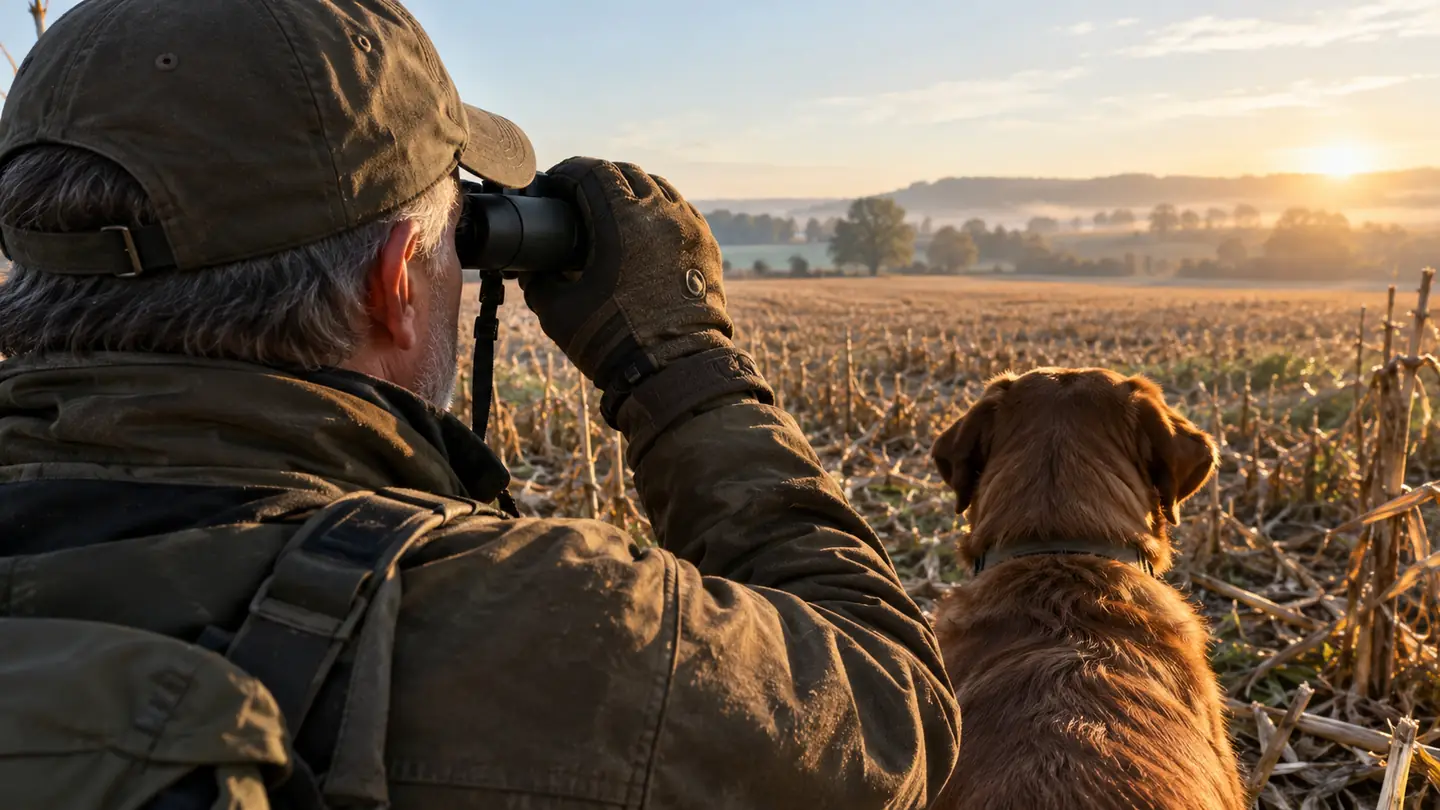
The moment that settled this for me happened on Saturday, November 23. I was in the ladder stand on the back edge of the family property, about 10 feet up a white oak, glassing a cut cornfield. A doe came out at the far end and started feeding toward the woods. I had the Vortex that morning. I watched her for the better part of an hour, and the whole time I never once thought about the binocular. The image was steady, my eyes were comfortable, and when a young six-point buck finally stepped out behind her, I had the crosshairs up before he cleared the treeline. I let him walk, but I remember thinking that the Vortex had just done exactly what I needed it to do without asking for anything in return.
That is the real test. A binocular that disappears is doing its job. The Nikon disappears too, most of the time. But in the moments that matter, when the light is going and the animal is moving, I trusted the Vortex's focus knob and its grip more. That is a personal call, and I would not call the Nikon a mistake. I would just say the Vortex fits the way I hunt: cold mornings, gloved hands, and gear that has to hold up for years. If I hunted mostly open country in mild weather, my answer might be different.
I did not take the Nikon out again after that morning. Not because it failed, but because I had my answer. The rest of the season I hunted with the Vortex, and by January I had stopped thinking about the comparison entirely.
The one I reached for on the last morning of the season
After a month of side by side use, the Vortex Crossfire HD sits on the passenger seat of my pickup and the Nikon stays in the closet. Check today's price on Amazon and see if it earns the same spot in your truck.
Amazon Check Today's Price on Amazon →Who Should Buy Which
Buy the Vortex Crossfire HD if you want one binocular you will never have to buy again. It is the better cold-weather companion, the better fit for a ground blind or a ladder stand, and the warranty means a dropped or banged-up pair is fixable for life. It is the one I keep on the passenger seat of the pickup, and it is the one I would hand a buddy who asked what to buy.
Buy the Nikon Prostaff P3 if the number on the scale matters more than anything else. It is lighter, its glass is right there with the Vortex, and it is a pleasure to carry on a long walk. If you mostly hunt from a blind or a boat where weight does not matter, the Nikon's advantage shrinks and the Vortex's warranty becomes the bigger deal. If you are a walker first and a hunter second, the Nikon is the honest pick.
I am not going to tell you the Nikon is a bad buy. It is not. I am going to tell you that when I reached for a binocular in the dark on the last morning of the season, I reached for the Vortex. That habit is the honest answer. You will not go wrong with either pair. You will just go wrong less often with the Vortex, because it fits the way most of us actually hunt.
Still deciding? This is the one I would hand a buddy.
The Vortex's lifetime warranty makes it the better long-term buy in my book. Check today's price on Amazon before your next hunt.
Amazon Check Today's Price on Amazon →