

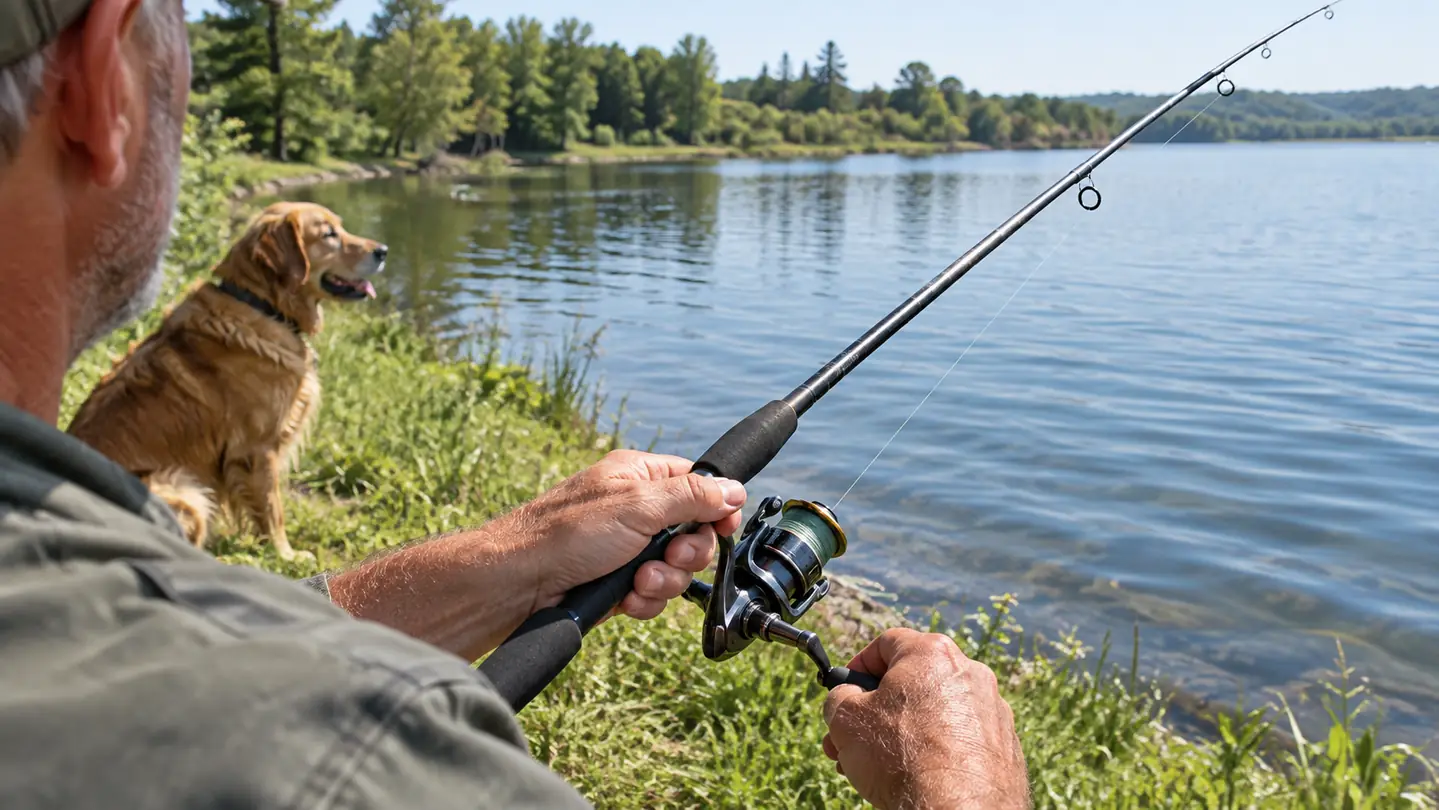
I fish a 14-foot jon boat on a nearby lake when I can, but most of my bass fishing happens with my feet in the mud. That is just the way weekends go. By the time chores are done and Scout has had her run, I usually have an hour or two before dark, and the closest water is a stretch of bank I can walk in about five minutes. If I only had one outfit for that kind of fishing, it would be a spinning combo. The KastKing Centron spinning combo has been the one I reach for most mornings this season, and this article is the step by step I wish someone had handed me twenty years ago.
Bank fishing gets a bad rap because most people do it wrong. They sit in one spot, heave a crankbait to the middle of the lake, and wonder why nothing bites. The bass are not out there. They are on the bank side of the cover, facing the water, watching for something to swim past. The whole trick is getting a bait into those pockets quietly and working it back the right way. That takes casting control more than it takes fancy gear. Here is how I break it down.
The spinning combo I keep in the truck for bank fishing
This is the outfit I reach for when the water is close and the time is short. It casts light lures well, it has survived a full season of gravel bars and tailgates, and it is ready to fish out of the box. If you fish from the bank, this is a smart place to start.
Amazon Check Today's Price on Amazon →Why the KastKing Centron earns the spot in my truck
The Centron spinning combo is not the most expensive rod and reel you can buy. I would not tell you it is. What it is, is the one that I do not worry about. It rides in the back of my older pickup truck between trips, gets leaned against a tailgate, and has been dropped on more gravel bars than I can count. The reel has stayed smooth through a full season of bank fishing, and the rod has enough backbone to horse a bass out of a laydown before it wraps you around a limb.
For the money, the Centron gives you a balanced setup that casts light lures well, and light lures are the bread and butter of bank fishing. When you are standing on the shore, you do not have the advantage of trolling or idling along the edge. You have to reach the fish, and a spinning reel spools out line with almost no resistance. That is why I reach for it over the baitcaster when the bank is brushy and the wind is up.
Step 1: Match the outfit to the bank, not the boat
The first mistake bank anglers make is buying a rod that is too short or too stiff. From the bank, casting distance is often the difference between a good day and a blank one, and a longer rod with a moderate action will load up and launch a light lure much better than a stiff rod built for heavy baits. The Centron spinning combo is set up with that kind of casting in mind. It lets you feel the bait load the rod tip, which matters when you are trying to drop a weightless worm into a pocket the size of a truck bed.
Line choice matters just as much. I spool mine with a braided line that has some abrasion resistance, then tie on a short fluorocarbon leader. The braid gives you the sensitivity to feel a bass pick up a soft plastic on the bottom, and the leader keeps the presentation from looking like a clothesline. If you are new to this, keep it simple: a spinning reel, a comfortable rod length, and line you can trust not to break on a good fish.
The other part of matching the outfit is balance. A combo that is tip heavy will wear out your wrist by the third hour, and you will start making lazy casts. The Centron balances well enough that I do not think about it, and that is the highest compliment I can pay a budget rod. When the gear disappears from your mind, you can actually fish.
Step 2: Rig for the bank with a Texas rig
If I could only fish one presentation from the bank for the rest of my life, it would be a Texas-rigged soft plastic. The reasons are simple. It is weedless, so it slides through grass and brush without snagging every cast. It casts well on a spinning combo because the weight is pegged close to the hook. And it catches bass in every season, whether they are shallow and aggressive or deep and neutral.
My go-to is a weightless or lightly weighted worm in a natural color, rigged on a wide-gap hook with the point buried just under the skin. The Centron spinning combo is ideal for this because the light weight of the bait is exactly what a spinning reel handles best. A baitcaster will often backlash when you try to skip a light worm under an overhang. The spinning reel just lays the line out.
The retrieve is where most people go wrong. They reel it back like they are cranking a winch. Instead, cast to a target, let the bait sink on a slack line, and then work it back with long pauses. The strike often comes on the pause. If you feel anything different, a tick, a faint tap, a line that feels heavy, set the hook. You will miss some, but you will catch more than the guy reeling in a steady fast crawl.
Step 3: Read the bank and cast to the cover
From the bank, you have to think like the fish. Bass relate to cover: laydowns, stumps, weed lines, docks, rocks, and anything that breaks the current or provides shade. The best bank fishing I have found in Kentucky is along stretches with fallen trees and a drop-off within casting range. The fish sit tight to that cover, facing out, waiting for something easy to swim past.
Walk slowly and stay low. Fish are spooky in clear water, and your silhouette is the biggest thing they see. I keep Scout quiet and behind me, and I make my first casts close to the bank, working the pockets before I ever throw to the outside. Bass in the shallows are often right at your feet, tucked under an overhang you cannot see until you are standing on top of it.
Pick a target and cast past it, then work the bait back through the strike zone. Most bank anglers cast right at the cover and pull the bait away from the fish. You want the opposite: land the bait beyond the laydown, let it sink, and bring it past the trunk where the bass are holding. That one habit, casting past the target instead of at it, will put more fish in your hand than any lure change.
Step 4: Make every cast count
Accuracy beats distance from the bank, but you still need enough distance to reach the outside edge of the cover. The Centron spinning combo casts well enough that I can lay a bait on a coin-sized patch of open water between two lily pads, and that is the kind of control that catches bass. Practice in your yard if you have to. Put a bucket at thirty feet and cast to it until you can hit it most of the time.
On the water, always know where your line is. The wind will push a light bait off course, so I cast with the wind when I can and use a sidearm or underhand cast when I need to get under overhanging branches. The spinning reel does not backlash like a baitcaster, so you can make those low, skip-like casts without punishing yourself for a mistake. That is a real advantage when the bank is brushy.
Set the hook with a sweep, not a yank. A bass will often pick up a soft plastic and swim a few feet before it commits. If you jerk the rod like you are starting a lawnmower, you will pull the bait out of its mouth. Instead, reel down until you feel the fish, then sweep the rod up and to the side. The rod loads, the hook sets, and the fight is on.
Step 5: Land the fish and handle it like you want it to survive
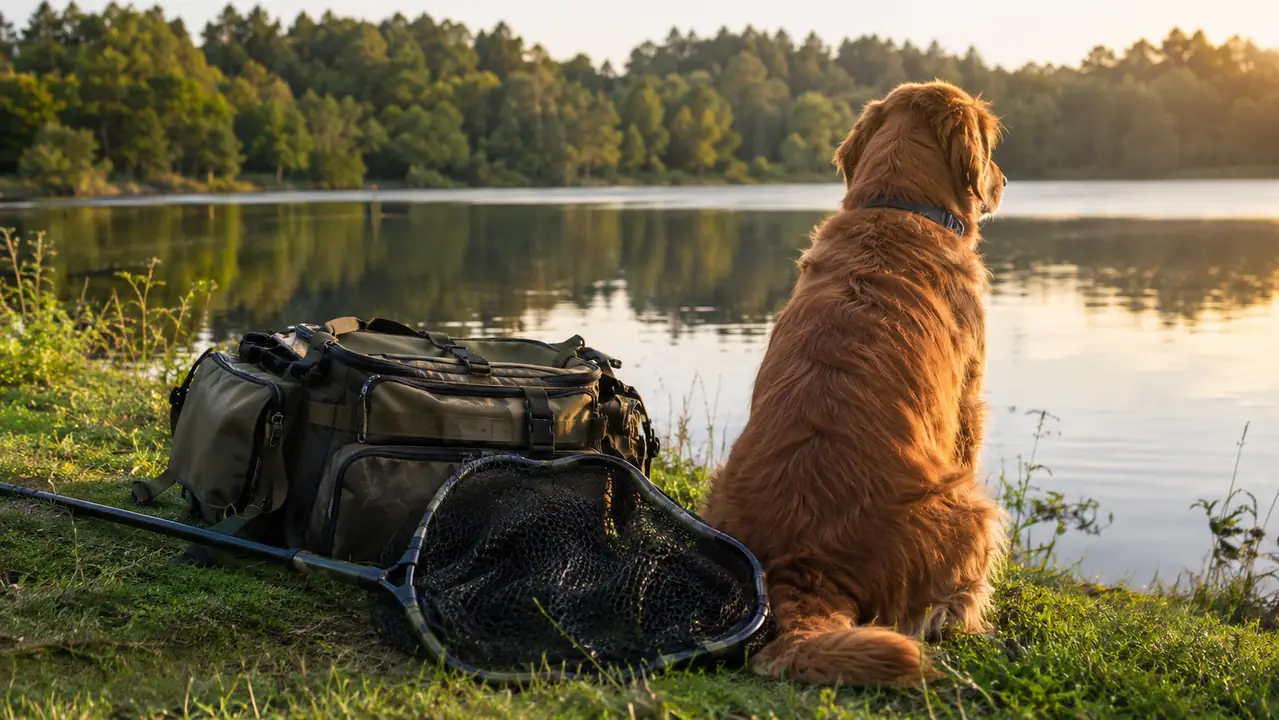
Bank landings are the hardest part of bank fishing. There is no net tied to the side of a boat, and the bank is often steep or muddy. I carry a folding landing net in my tackle bag, and it is worth every ounce. When you get the fish close, lead it into the net headfirst instead of trying to swing it up the bank. Swinging a bass up onto dry ground is hard on the fish and hard on your gear.
Wet your hands before you handle a bass, support its weight under the belly, and keep it in the water as much as you can while you remove the hook. A pair of needle-nose pliers makes hook removal quick, and a good pair of sunglasses helps you see the hook in the fish's mouth. If the bass is deep-hooked, cut the line close to the hook and let it go. The fish has a better chance than you think.
For a photograph, hold the bass horizontally and keep it out of the water for only a few seconds. Then revive it in the shallows, moving it gently back and forth until it swims off on its own. The next time you walk that same bank, that fish might still be there, and it will be bigger than it was today.
What Else Helps
A few things make bank fishing easier without costing much. Polarized sunglasses let you see bass and structure below the surface before you cast. A small tackle bag with a few packs of soft plastics, a handful of hooks, and some bullet weights covers almost every situation. Needle-nose pliers, a folding net, and a spool of leader material round out the kit. I also carry a small pocket scale because I like to know what a good Kentucky bass weighs, but that is optional.
One more thing: patience. Bank fishing rewards the angler who makes a hundred good casts instead of twenty frustrated ones. The guy who catches fish from the bank is not the one with the most expensive rod. He is the one who keeps the bait in the strike zone, keeps his silhouette down, and keeps his line tight when the bite comes.
The guy who catches fish from the bank is not the one with the most expensive rod. He is the one who keeps the bait in the strike zone and his line tight when the bite comes.
The Bottom Line
You do not need a boat to catch bass. You need a spinning combo that casts light lures well, a handful of soft plastics, and the patience to work the bank the right way. The KastKing Centron spinning combo has been the outfit I grab first this season, and it has earned that spot. Rig it simply, cast to the cover, and keep your line tight. The bank is a better place to fish than most people give it credit for.
Take the Centron spinning combo to your bank
If you fish from the bank more than from a boat, this is the outfit I would start with. It casts light lures well, stands up to the bumps and drops of shore fishing, and leaves you money for soft plastics and hooks. Check today's price on Amazon and see if it fits your water.
Amazon Check Today's Price on Amazon →