
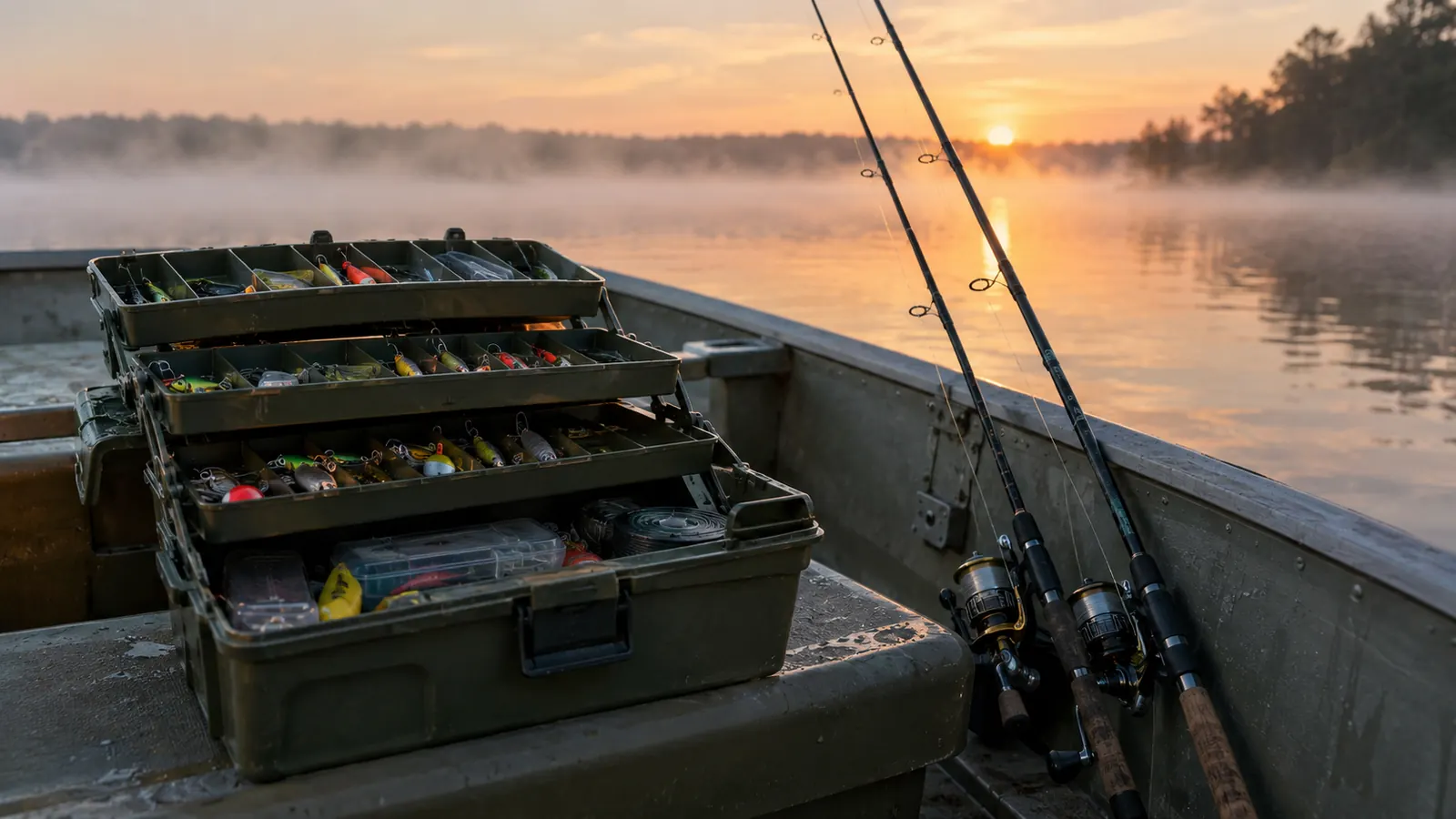
I used to treat my tackle box like a junk drawer with hooks in it. Everything went in, nothing came out, and I spent the first twenty minutes of every trip on the lake untangling spinnerbaits from treble hooks while the bass bit for somebody else. Fishing from a fourteen-foot jon boat makes it worse, because there's no room to spread gear out, and every loose lure ends up under a seat or in the dog's mouth. The fix wasn't a bigger box. It was stocking the one I already had on purpose.
There are two ways to go about it. You can buy lures one at a time, a crankbait here and a pack of hooks there, and hope you eventually end up with something that covers the basics. Or you can start with an assortment that's already put together and then sort it to fit the water you actually fish. I've done both, and the second way wins every time. These days I stock my jon boat box out of a PLUSINNO tackle kit, the 137-piece set with crankbaits, spoons, hooks, weights, and the usual small accessories. Then I spend one afternoon organizing it so I know where everything is. Here's the exact process I'd walk you through.
Start With a Kit That Already Covers the Basics
The PLUSINNO 137-piece tackle kit puts crankbaits, spoons, hooks, and weights in one box, so you're not building your setup one trip at a time.
Amazon Check Today's Price on Amazon →The Five Steps That Got My Tackle Box Under Control
Before I show you the steps, one note on how this works. I'm not telling you to carry all 137 pieces with you. I'm telling you to use the kit as the base, then sort it down to what earns a spot in the boat. The goal is a box where every compartment holds one kind of thing and you can reach any of it without digging. The first time I did this it took about an hour, and most of that was untangling the mess I'd made over the previous season.
Step 1: Dump It All Out and Sort by Type
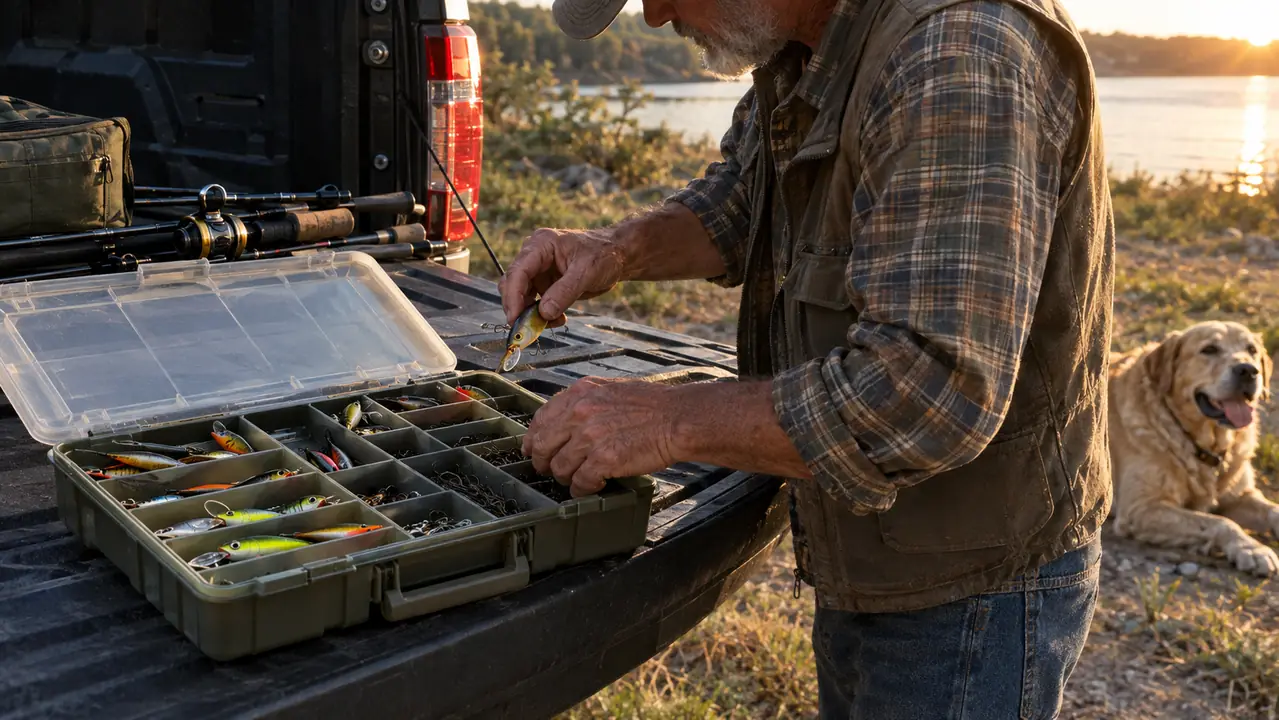
Start on the tailgate or the kitchen table, somewhere you can spread out. Open the PLUSINNO kit and dump every compartment onto the table. You'll get a mix of crankbaits, spoons, hooks, weights, and small accessories, and that's exactly what you want. Don't try to organize them while they're still in the tray. Make piles instead: hard baits in one pile, hooks in another, weights and sinkers in another, and anything that isn't a bait or terminal tackle in a fourth. Sorting is the whole job, and it goes fast once the piles exist.
This is also the moment to check for damage. I've found split rings that were ready to pop and treble hooks with bent points in kits that had never been fished. Anything questionable goes in a coffee can on my workbench, not back in the boat. It costs less to retire a crankbait than to lose a five-pound bass because a hook straightened out at the net. Hooks that are dull but straight get a quick pass with a file and go back in. Ten minutes of checking now saves you a lost fish in July.
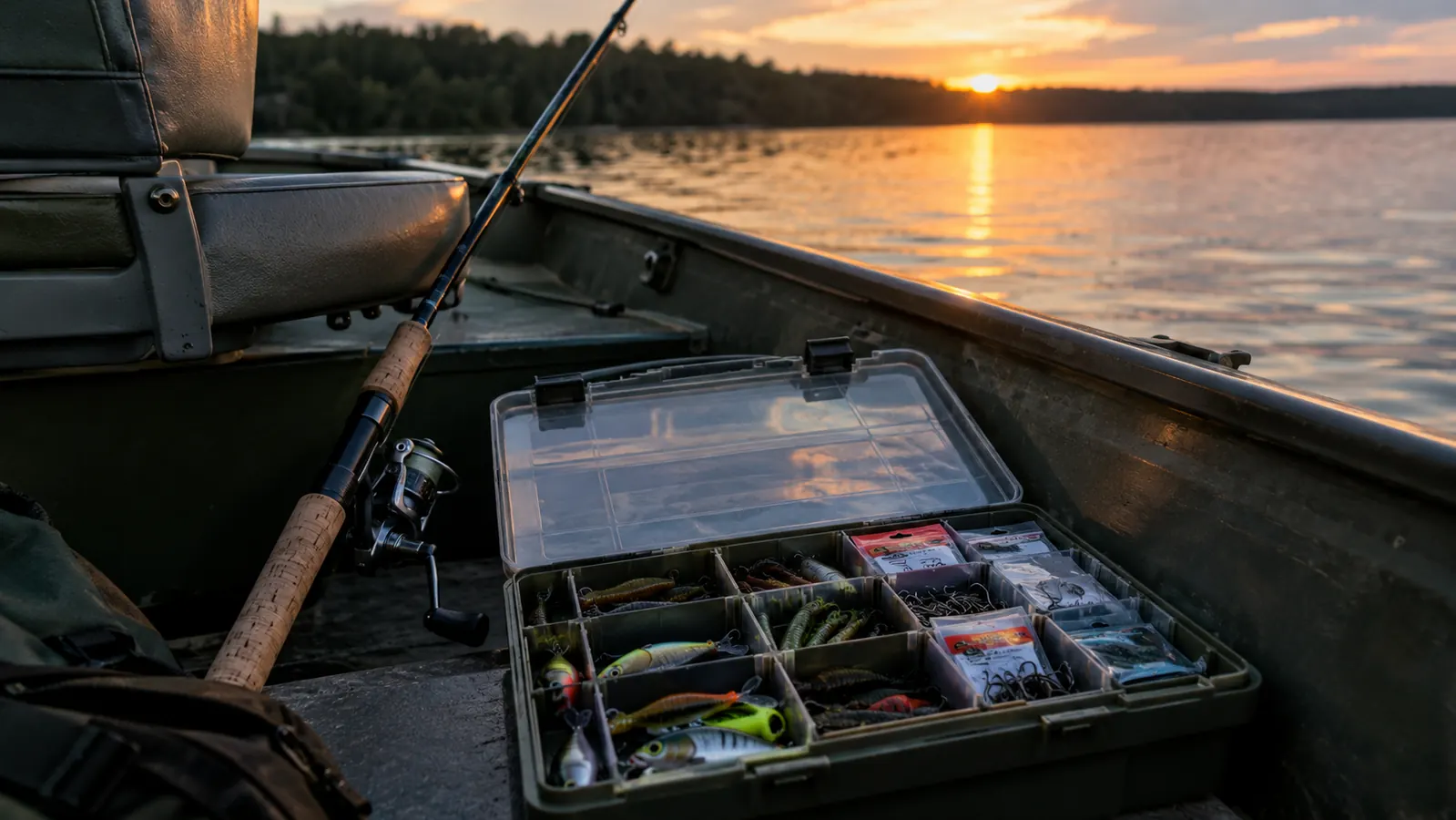
Once the piles are sorted, put the terminal tackle into the small compartments first, the hooks and weights that would otherwise roll around. Then seat the hard baits in the larger slots so each one has a place and a hook keeper. The goal at the end of this step is simple: open the box, see every bait, and close it again without anything moving. If something slides when you tip the box, it's in the wrong compartment.
Step 2: Put the Baits You Reach For in the Top Tray
The PLUSINNO box has multiple trays, and the way I use them is simple. The top tray holds the baits I reach for on every trip. For me that's a handful of crankbaits in natural shad and crawfish patterns, a couple of spoons, and the hooks I use most. Not the whole kit. If I have to dig through forty crankbaits to find the one I want, I won't bother, and that lure will sit in the boat all season without ever getting wet. The top tray should look like a short list of things you trust, not a catalog.
The lower trays hold the backups and the seasonal stuff. My home water is a small Kentucky reservoir about fifteen feet at its deepest, stained most of the year, with brush piles that hold fish shallow in the morning. So shallow crankbaits and spinnerbaits live up top, and the deep divers stay below until the summer pattern kicks in. Sorting by how often I actually reach for something did more for my fishing than any new rod I've bought. You'll feel it the first time you grab a bait without moving three others to get to it.
Step 3: Match the Box to the Water You Fish, Not the Catalog
A 137-piece kit is a starting point, not a finished plan. The lake in front of your house decides what belongs in the top tray, and that's the step most people skip. On my stained reservoir, natural patterns and a few bright ones for low-light days cover most trips. If you fish clear water, a river, or a pond that's been fished hard, your mix will look different, and that's fine. The kit gives you a little of everything, which is exactly what you want when you're not sure yet what the lake wants.
The same logic applies to hooks and weights. I fish soft plastics on a Texas rig more than anything else, so the wide-gap hooks and bullet weights move to the top tray and the rest stay below. The kit's assortment means I always have the sizes I need for crappie and catfish trips too, without carrying a second box. Take notes on what caught fish for a few weeks, then adjust. The box should change with the season, and if it doesn't, it's a storage bin, not a tackle box.
One more thing about matching the box to your water: keep a small notebook or a notes app on your phone and write down what caught fish and what didn't. I started doing this three seasons ago, and it's the reason my top tray looks the way it does. You'll notice patterns that surprise you, like how the fish in this lake want a slow retrieve in the first hour of light and a faster one once the sun hits the water. That kind of information is worth more than any lure in the box.
Step 4: Rig Soft Plastics Before You Leave the House
The single biggest waste of time in a jon boat is rigging a worm while the boat drifts and the wind pushes you off the spot. I fix that at the kitchen table the night before. I take a handful of soft plastic worms, Texas-rig them on wide-gap hooks with a pegged bullet weight, and drop them into a small utility box that lives in the top tray. When the bite is on, I grab one, tie it on, and I'm fishing in under a minute. The kit doesn't come with soft plastics, so this is the one category I add on my own.
I keep the pre-rigged baits right next to the crankbaits, and I restock them whenever the pile gets thin. It takes about ten minutes at the table, and it saves the exact minutes that matter most, the first hour of daylight when the fish are chewing. If you fish from the bank, the same trick works from the tailgate of the truck. Rig them before you park, not after. You'll make more casts in the good light, and you'll stop rushing the knot when you can hear a bass blowing up on baitfish.
One warning: pre-rigged worms with exposed hooks will poke through a soft plastic bag and hook everything else in the tray. So I keep them in a hard-sided utility box or a plastic tube, not loose in the compartment. The PLUSINNO kit has room for a small box like that in the bottom tray, which is where mine lives. It takes one extra minute when I pack up, and it means the pre-rigged baits are still there, ready to go, the next time the alarm goes off at four in the morning.
Step 5: Make It Quiet and Tangle-Free for the Boat
This is the step nobody talks about, and it matters more in a small boat than anywhere else. Scout rides along with me most trips, a seventy-pound retriever who has no respect for an open tackle box. If a spinnerbait is hanging loose, it's getting hooked on a dog, a net, or a seat before we even set the anchor. So every hook gets seated back in its slot, every treble gets a keeper, and the box gets latched before we leave the dock. It takes thirty seconds, and it saves an afternoon of cussing.
The quiet part matters for the fishing too. Metal-on-metal noise carries across still water, and a box that rattles every time the boat rocks will put fish down before you ever make a cast. The PLUSINNO trays hold the baits snug enough that nothing slides around, which is more than I can say for some boxes I've owned. Loose weights get a compartment of their own so they're not rolling around the bottom. Keep it latched, keep it quiet, and the fish will never know you're there.
What Else Helps
Beyond the kit itself, I add three cheap things to every jon boat box. First, a small pair of fishing pliers with a split-ring tool, because every crankbait in the world eventually needs a split ring opened and your teeth are not the right tool. Second, a hook file small enough to live in the box, so a dull point gets fixed on the water instead of costing you a fish. Third, a dry bag or silicone pouch for the phone and the truck keys, because a tackle box is not waterproof and neither is a jon boat in a summer storm. All three fit without crowding the lures, and none of them costs much.
An hour of sorting on the tailgate saves me twenty minutes of untangling on the water, every single trip out.
If you're starting from a box that's been growing for years, or from nothing at all, the process is the same. Get the kit, dump it out, sort it, and put back only what the water in front of you actually wants. An afternoon on the tailgate with a cold drink and a dog asleep under the truck beats a season of digging through a tangle. The fish don't care how much gear you own. They care whether the bait is in the water when they're biting. I'd rather have thirty baits I can find in the dark than three hundred I have to dig for. That's the whole article in one sentence.
The Bottom Line
A jon boat tackle box does not need to be big. Mine is a single box with a top tray I can open without moving anything else, and it holds everything I actually use in a season of bass fishing. The PLUSINNO kit gives you the raw material, and the five steps turn it into a box that works. If you take one thing from this, take this: an organized box gets fished. A tangle gets ignored, and the fish keep biting for someone who can reach a bait in the dark.
Stock the Whole Season With One Kit
The PLUSINNO 137-piece tackle kit gives you a season's worth of crankbaits, spoons, hooks, and weights to sort, organize, and actually fish.
Amazon See Today's Price on Amazon →