

Every spring I read the same question in the fishing forums: what is the cheapest spinning combo that will not fall apart by October? For years I typed an answer without ever fishing the thing I recommended. Last April I finally fixed that. I ordered the KastKing Centron, the spinning version, and ran it through a full season from the bank of a small Kentucky lake. I am glad I did. But there are a few things the product page does not tell you, and a couple of them would have changed how I spent my money.
To be clear, this is not a review from a guy who casts twice, snaps a photo of one fish, and declares victory. I am Cal Brewer, a maintenance supervisor in rural Kentucky. I get out most weekends, and I fish from a 14-foot aluminum jon boat when the lake is calm and from the bank the rest of the time. Between April and October I made more than forty trips with this combo. I caught bass, crappie, and a few catfish on it. I also kept notes, the kind of notes that tell you what actually held up and what just looked good on the first cast.
The Quick Verdict
A genuinely good budget reel wrapped in a so-so rod. Buy it for the reel, keep your expectations on the rod, and you will get your money's worth.
Amazon Check Today's Price →The Centron earned its keep in my truck bed for six months
I ran this combo through a full season of bank fishing and kept notes on every trip. If you want an honest answer about whether it is right for you, read the rest of this review, then check today's price on Amazon.
Amazon Check Today's Price on Amazon →How I've Used It
I ordered the spinning version, spooled it with 10-pound monofilament, and rigged it with a quarter-ounce jig head and a soft plastic for most of the summer. My home water is a lake about twenty minutes from the house, roughly six hundred acres, with an easy bank to walk on the north side. I fished three or four spots there, mostly around fallen timber and a couple of rocky points, and I took the jon boat out when the wind stayed under ten miles an hour.
The combo showed up in early April, and by the first week of May I had already decided the reel was the story. It casts a quarter-ounce lure a long way with no effort, and the drag came out of the box smooth enough that I did not touch it for the first month. That surprised me. At this level, the drag is usually the first thing to feel like it was assembled on a Friday afternoon. This one was consistent from the first fish to the last.
By mid-July I had landed more than thirty bass on it, the biggest a fish I weighed at 4 pounds 6 ounces from a laydown on the north bank. I also caught a dozen or so crappie and three catfish that put more bend in the rod than any bass did. That is when I learned the honest limit of this combo. The rod, not the reel, is what runs out of muscle first. I will get to that in a minute, because it is the part of this review that nobody else seems to write.
The routine was simple and the same almost every time. I parked the truck on the gravel pull-off, grabbed the Centron and a small tackle bag, and walked the bank with Scout ranging ahead of me. Scout is a 7-year-old retriever, about 70 pounds, and he has knocked this combo off a stump twice and stepped on it once. Both times I picked it up, checked the guides, and kept fishing. That is part of the review too, because a rod that breaks when a dog steps on it is not a rod I want, and this one did not even flinch.
What Nobody Tells You About the Centron
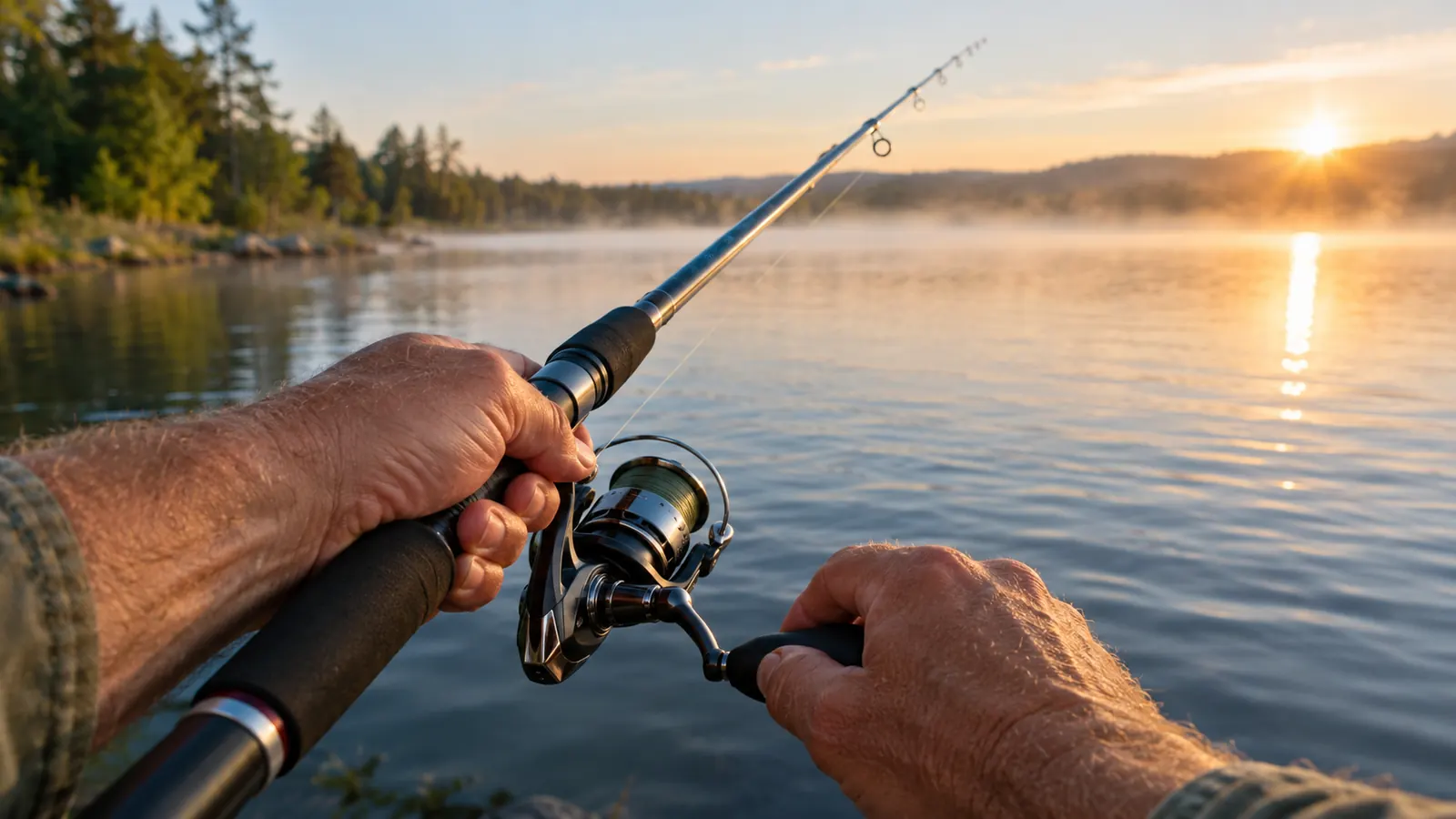
The first thing the product page does not say is that the reel and the rod are not equals. KastKing put most of the engineering into the reel, and it shows. The rod is a serviceable graphite blank, but it is the cheaper half of the pair. It is not a bad rod. It just is not the same class as the reel. That matters if you buy this combo expecting the whole package to feel like the reel does, because it will not, and you should know that before you order instead of after.
The second thing is the break-in. Out of the box, my reel felt tighter than it should, almost stiff when I turned the handle. I came close to sending it back. A friend who runs a tackle shop told me to fish it for a week before I decided. I did. By the fourth trip the handle spun freely and the line lay leveled out into a clean stack. If yours feels tight on day one, give it a few outings. That is the kind of detail that never makes it into a five-star review.
The third thing is the drag. It was smooth from the start, which is rare at this level, but it is not a big-fish drag. A 4-pound bass is easy. A 10-pound catfish in a current will test it, and a bigger fish will find the limit. I fish for bass and crappie, so it is plenty for me. If you are buying this combo to drag big catfish out of a river, buy something with more drag and a longer rod. The Centron is honest about what it is, and you should be honest with yourself about what you need.
The fourth thing is harder to put in a review, so I will just say it. None of the parts feel expensive. The reel body is graphite, the handle has a little flex, and the bail and line roller are plain. That is not a complaint. It is a description. Nothing on my unit has failed in a season, and I have knocked it around in the bed of my pickup truck the whole time. But if you are used to a high-end reel, you will feel the difference in your hand on the first cast.
One more thing, and this one is about expectations. The Centron is not the combo to buy if you want to feel like you are holding something expensive. It is the combo to buy if you want to catch fish without worrying about your gear. Those are different purchases, and plenty of anglers buy the first one when they actually needed the second. I have done it myself, and it is why I am writing all of this down. If you already own a high-end rod, the Centron will feel like a step down. If you are starting out or you fish rough, it will feel like a bargain that keeps working.
What Works: The Reel Is the Story
The Centron reel casts well. I am not a tournament caster and I do not need a hundred feet of distance to put a soft plastic beside a stump. But when I need to reach the far edge of a creek channel from the bank, the reel delivers. With a quarter-ounce weight and 10-pound mono, I hit that edge on a regular basis, and I have never once had a tangle with the spinning version because there is no spool to backlash. The bail trips smoothly, the line lay is even, and the drag stays consistent from the start of a fight to the end.
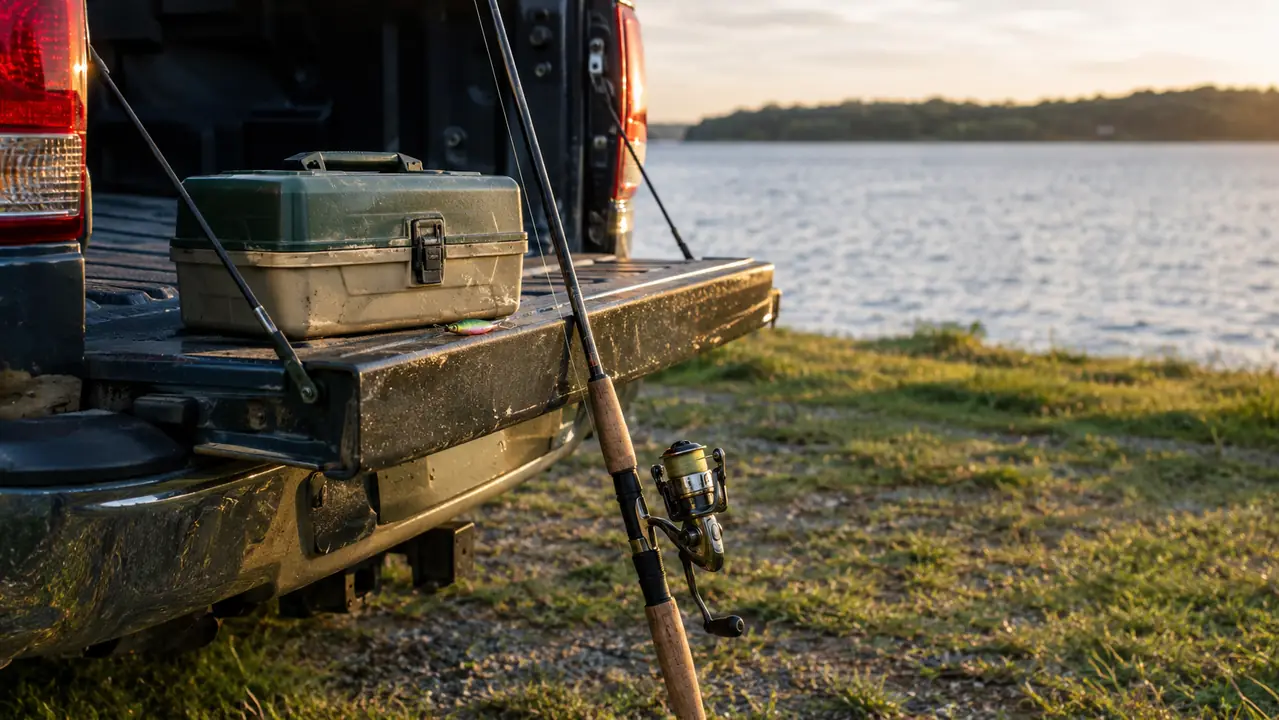
It has also held up in ways I did not expect. The combo has been rained on, dropped in the gravel, and bounced around in the bed of my truck for six months. The finish has a few scuffs from the truck bed, but everything mechanical still works like it did in April. The handle has not loosened, the drag knob has not slipped, and the bail spring is still tight. At this level, that is usually the first thing to fail, and mine has not failed yet. I would not have bet on that in April.
The rod is honest too, once you understand what it is. It is a medium-fast action, which is a fair middle ground for the way I fish. It loads up enough to cast a light crappie jig, and it has enough backbone to set a hook on a bass in cover. What it does not have is tip sensitivity. I feel the thump of a bass taking the bait, but I do not feel a crappie breathing on it the way I do on a more expensive rod. If you fish with your fingers on the line, you will be fine. If you need tip sensitivity, this is not the rod for you.
I also want to say something about casting all day. There are mornings when I leave the house before daylight and do not put the rod down until the sun is high. The Centron handled that without complaint, and not just mechanically. The grip stayed comfortable, the reel never got hot, and the line never dug into the spool under pressure. I had one afternoon in August when the bass were hitting a topwater popper, and I cast that popper for three straight hours. The reel never hesitated, and that is the memory I keep from the whole season.
Where It Falls Short
The honest list of complaints is short, but it is real. First, the rod tip is stiff when you are casting light stuff. I fish an eighth-ounce crappie jig about a quarter of the time, and the Centron does not cast it as far as I would like. It is fine for bank fishing, where you do not need distance, but it is the wrong tool for long-lining a light jig across open water. I learned that on a morning in late May when the crappie were holding sixty feet off the bank and I could not reach them.
Second, the balance is off. The combo is tip-heavy, and you notice it after two hours of casting from the bank. It is not a dealbreaker, but I am 54 with a shoulder that complains, so I notice more than most. If you fish all day from a kayak or a boat, you will feel it in your forearm by the end of the day. A lighter reel would fix it, but a lighter reel would also cost more than this whole combo, so it is a tradeoff you accept when you buy at this level.
Third, the rod handle and reel seat are fine but plain. The EVA foam is comfortable, and the reel seat has held the reel tight all season, which is more than I can say for a couple of combos I have owned over the years. But the whole package looks and feels like what it is: a budget combo. It does not look bad. It just does not look like a high-end setup, and pretending otherwise would be dishonest. If you care about how your gear looks in the boat, that matters to you more than it does to me.
Fourth, and this is the one that surprised me most, my unit had a small burr on the line roller. I found it in September when I was replacing the line. It has not cut a line and it has not caused a wind knot, but I check it every time I respool. It is the kind of small manufacturing miss that happens on budget gear, and KastKing will make it right if you contact them. It is also the kind of thing that never shows up in the product photos, so consider this your heads up to check yours when it arrives.
There is one more honest note, and it is about the carrying case and packaging. The combo arrived in a simple cardboard box with the rod and reel assembled, which is convenient, but do not expect the kind of padded rod sleeve you get with pricier gear. I bought a cheap rod tube for the truck bed within the first month, and I would tell anyone who plans to haul this combo around to do the same. The blank is tough, but it is still graphite, and the less it bangs around, the longer it will last.
What I Liked
- Reel casts far and smooth for the money
- Drag is consistent from the first fish to the last
- Survived a full season of bank fishing and truck-bed rides without a mechanical failure
- Bail, anti-reverse, and line lay are still tight after six months
Where It Falls Short
- Rod is the weak half: stiff tip and modest sensitivity
- Tip-heavy balance wears on a long day of casting
- Light jigs do not cast far
- My unit had a small burr on the line roller; check yours when it arrives
I caught more than thirty bass in four months on this combo, and the only thing that ever made me put it down was a tip-heavy rod at the end of a long day of casting.
Who This Is For
Buy the KastKing Centron if you fish from the bank, if you are new to spinning gear, or if you want a combo you can leave in the truck bed without losing sleep. It is the right tool for a weekend angler who wants to catch bass, crappie, and channel cats without spending a lot, and who understands that a combo at this level is a tradeoff, not a punishment. The reel is genuinely good, the rod is good enough, and a full season of hard bank fishing has not broken either one. That is a fair deal in my book.
Who Should Skip It
Skip it if you need a sensitive rod for finesse fishing, if you spend eight hours a day casting from a kayak and need perfect balance, or if you are buying this to wrestle big catfish out of a river. Skip it if you want a combo that looks like it cost three times what it did, because it will not. And skip it if you are the kind of angler who will blame the rod for every short cast, because the rod is the weak half, and I would rather you hear that from me than discover it after your money is spent.
Bottom line: the reel is the keeper
A full season on a Kentucky lake, more than thirty bass, and the only real complaint is a rod that was never the star of the show. If that sounds like your kind of fishing, check today's price on Amazon. If you are still on the fence, go back and read the 'who should skip it' section one more time.
Amazon Check Today's Price on Amazon →