
I bought the PLUSINNO 137-piece tackle kit last April for one reason: I was tired of standing in the fishing aisle with a basket full of loose packages, trying to build a box from scratch and doing the math on every single purchase. The kit showed up two days later, and I dumped the whole thing onto the kitchen table. An hour later I had sorted every compartment, tested every snap, and set aside three crankbaits that needed hook work before they were fishable. That first hour told me most of what I needed to know, and the six months since have confirmed it. This is the honest version of that story.
Here is what nobody tells you about a kit like this. The number on the box, 137 pieces, sounds impressive until you realize that a good chunk of that count is hooks, weights, and small parts that you would have bought anyway. The real question is whether the lures earn their keep. I have now fished this kit from the bank of a small Kentucky lake and from the front of my 14-foot jon boat, through spring, summer, and early fall. I have caught fish on it and I have cussed at it. Both are part of this review.
The Quick Verdict
A complete starter kit that gets a new angler on the water fast, as long as you accept that some hooks need replacing and a few crankbaits need tuning before they fish the way they should.
Amazon Check Today's Price →The kit that started with 137 pieces and earned a permanent spot in my truck
Six months in, the PLUSINNO kit is still the first box I grab for bank fishing and the one I hand to a guest who needs gear in a hurry. Check today's price on Amazon and see if it fits your water.
Amazon Check Today's Price on Amazon →How I've Used It
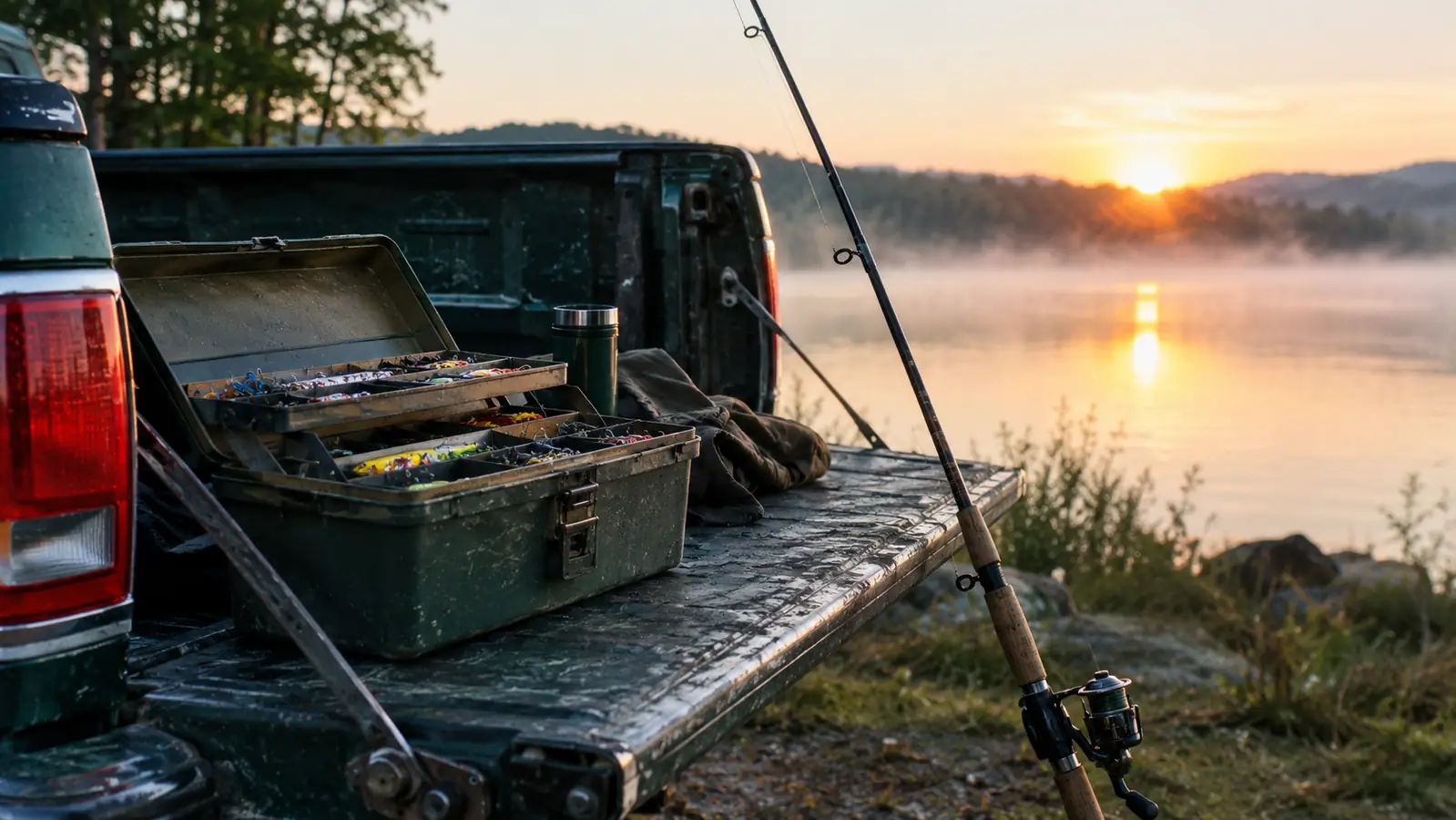
I keep this kit in the back seat of my older full-size pickup, behind the passenger seat, where it rides with Scout on the trips where he comes along. It has been tossed over a tailgate, dropped on a gravel bank, and slid across the floor of the jon boat more times than I can count. The latch has held up, the hinges are still tight, and the lid has not cracked. That matters more to me than it should, because I have killed cheaper boxes in a single season.
My normal setup is to fish from the bank during the week after work and take the 14-foot jon boat out on weekends when the lake is calm. The PLUSINNO kit has been my main box for both. I fish bass mostly, with some crappie and catfish mixed in, and I have used just about everything in this kit at least once. On a Tuesday evening in July I fished from the bank for two hours and caught four bass on the same shallow crankbait, which is the kind of evening that makes a kit feel like a good investment. The crankbaits get the most time. The spoons get used when the fish are scattered. The hooks and weights are the part I reach for every single trip, because you can never have too many of either.
The first thing I did, before the box ever touched water, was go through every treble hook on every crankbait. I squeezed the barbs with a pair of pliers and found two that bent under light pressure. I replaced the hooks on three crankbaits right then, using better hooks I had in my other box, and set the originals aside for a day when I needed spare parts. That ten-minute job is the difference between this kit feeling cheap and feeling like a solid value.
What's Actually in the Box
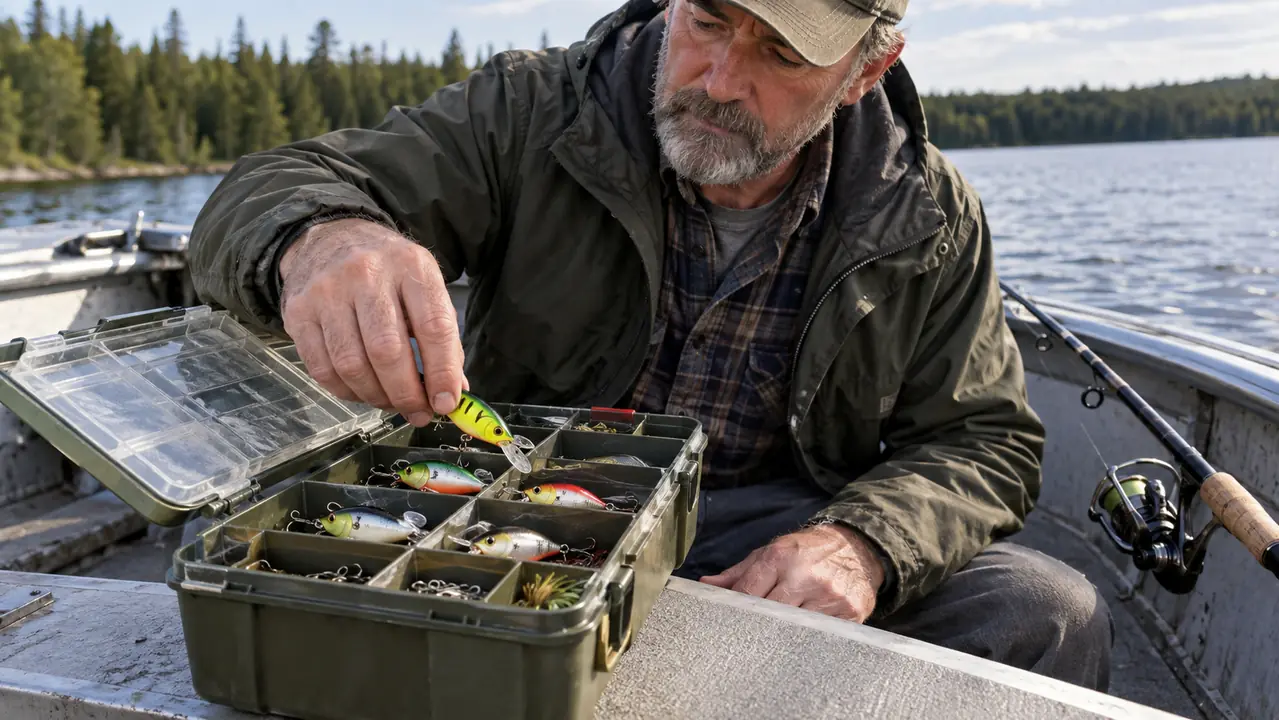
The kit is organized into a hard plastic box with multiple compartments of different sizes. The main event is the crankbaits, a mix of shallow runners and lipless baits in a range of sizes, most of them around two to three inches long. Next to those are the spoons, the hooks in several sizes, a supply of weights, and a handful of small accessories like snaps and swivels. It adds up to 137 pieces, but the honest way to look at it is maybe a dozen real lures and everything else is the supporting cast.
Here is where the honest part comes in. Not every piece in the box is a winner. A few of the smaller hooks are duller than I would like, and I sharpened them with a hook file before trusting them. A couple of the snaps are thin and I bent one on the second trip while changing lures in a hurry. None of that ruined the kit, and none of it surprised me. At this price point, you expect some pieces to be better than others. The trick is knowing which ones to upgrade and which ones are fine as they are.
The box itself is worth talking about because it is half the product. The compartments are laid out so that the lures lie flat instead of piling on top of each other, which keeps the hooks from tangling into one big mess. That was the thing that sold me during that first hour on the kitchen table. Scout sat on the floor watching me sort everything, and the only time he moved was when a spoon slid off the table and clattered on the tile. He is used to gear noise by now, but that box stays quiet in the truck, which matters when you are trying to sneak up on a bank at daylight.
What Earned Its Spot
The shallow crankbaits are the heart of this kit. On a warm evening in late May, I was fishing a rocky point from the jon boat, casting along the drop-off where the bottom fell from three feet to six. One of the crankbaits, the one that runs about three feet down, got hammered about halfway back on the retrieve, and the rod doubled over. It was a bass that went maybe three pounds, and it came up twice and shook its head before I got it to the net. It fought hard, the hooks held, and I landed it on the first try. That single fish made the whole kit worth it, because I had tied on that lure ten minutes earlier without thinking twice.
The spoons have been the surprise. I did not expect much from them, but on a slow August morning when the bass were deep and sulking, I cast a spoon along a weed line and picked up two keeper crappie and a small bass. The spoon has a good flutter on the fall, and for bank fishing, where you need to cover water without moving, it has become my go-to when nothing else is working.
The hooks and weights are the quiet workhorses. I have gone through more of the weights than I expected, losing them on snags and in the grass along the bank. One July afternoon I hung up on a submerged log and lost a weight and a hook in one pull, and the only reason I was back casting within two minutes was that the kit had a full compartment of replacements. Having a full compartment of them in the kit has saved me more trips back to the truck than I can count. The hooks are serviceable for most situations, and while I prefer my usual brand for the serious stuff, these have landed plenty of fish on days when I grabbed the kit and ran.
One morning in early September I handed the whole box to a buddy who had not fished in years. He opened it, picked a crankbait, tied it on, and was casting within five minutes. That is the real value of a kit like this. It removes every excuse and every barrier. You open the box, you pick something, and you fish. For a loaner, that is exactly what you want.
Where It Falls Short
Now the part that the product page does not tell you. The treble hooks on the crankbaits are the weakest link. They are thin and they bend. I lost a fish in June because a hook opened up during the fight. It was a decent bass, maybe two and a half pounds, and it came unpinned about ten feet from the boat. The hook straightened instead of holding, and the fish swam off with the lure still in its mouth. I spent twenty minutes cussing in the bottom of the jon boat before I realized it was my own fault for not swapping the hooks out sooner. The kit gives you a full season of fishing if you treat the hooks as disposable, or a better season if you replace the bad ones up front.
Some of the crankbaits do not run true out of the box. Two of them wanted to roll onto their side, and one ran so far left that it was almost useless. I fixed all three with a pair of needle-nose pliers, bending the eye slightly until they tracked straight, but a beginner would not know to do that. They would just think the lures were bad. This is the kind of thing a manufacturer could fix at the factory, and the fact that they do not is the clearest sign of where the corners were cut.
The soft baits, the ones that count toward the 137, are stiff and do not have much action in the water. I tried them a few times early on, rigged them the usual ways, and got almost no strikes. I eventually stopped using them and stuck with the crankbaits and spoons. If you are buying this kit for the soft plastics, you will be disappointed. If you are buying it for everything else, you will not miss them.
There are also a few pieces that are just filler. The count of 137 sounds great, but a good number of those pieces are small parts and accessories that any angler already has in a drawer somewhere. That is not a dealbreaker, it is just the math of how these kits are built. Go in knowing that you are really buying a dozen or so lures, a pile of hooks and weights, and a decent box, and you will not feel cheated.

Building Your Own Box vs This Kit
The alternative to buying a kit is building your own box, and I have done both. I have a box of my own that I built over years, one lure at a time, and it is full of stuff I actually use: a handful of crankbaits I trust, a few jig heads, a spool of line, and the same hooks and weights I have bought a dozen times. The problem is that it took me years to get there, and it cost me more than I want to admit, and most of the early stuff I bought is gone now, lost to snags or replaced because it did not work. For a new angler, or for someone who wants a spare box that lives in the truck, the PLUSINNO kit skips all of that.
The catch is that building your own box means every piece in it has been chosen by you, for your water, for the fish you chase. The kit is a generalist. It covers bass, crappie, and panfish reasonably well, and it will handle catfish in a pinch with the hooks and weights. But it is not tuned to any one fishery. If you fish one lake every weekend and you know exactly what the bass are eating, you will still want your own box for the serious trips, and the kit becomes the backup.
Some people will look at a mystery box subscription instead. The short version is that a mystery box is a gamble every month, while this kit is one purchase and done. You know exactly what you are getting, and you can upgrade pieces as they wear out. For my money, that predictability is worth more than the surprise of a monthly box. The kit is also a strong answer to the question of whether a starter kit saves money, and for a beginner it clearly does.
What I Liked
- Everything arrives in one organized box, ready to fish the same day
- The shallow crankbaits and the spoons catch fish consistently
- The box is tough enough for the floor of a jon boat or the back seat of a pickup
- Hooks and weights in several sizes cover most freshwater situations
- Easy to upgrade: replace the thin treble hooks and you have a solid kit
Where It Falls Short
- Some treble hooks are thin and bend during a fight
- A few crankbaits run sideways until you tune the eye with pliers
- The soft baits are stiff and produced almost nothing for me
- Part of the 137 count is filler, small parts most anglers already own
- It is a generalist kit, not tuned to any one fishery
The first weekend I replaced three sets of treble hooks before I ever cast a lure. That ten-minute job is the honest cost of buying a kit instead of building a box.
Who This Is For
This kit is for the angler who is just getting started and does not want to stare at a wall of lures not knowing what to buy. It is for the dad who wants a box he can hand to his kid without worrying about the kid losing a nice lure on a snag, because everything in this box is replaceable. It is for the bank fisherman who wants a complete setup in one box that lives in the truck and is always ready. It is for anyone who needs a loaner box for guests, because handing someone a complete kit is a lot better than handing them three random lures from your own box and hoping they bring them back.
It is also for the angler who already has a serious box but wants a spare. Mine lives behind the passenger seat of my truck, and it has saved more trips than I can count. When I forget my main box, or when a buddy shows up without gear, the PLUSINNO kit is there. For that job alone it has earned its keep.
Who Should Skip It
If you are a tournament angler or someone who has been bass fishing for ten years and knows exactly what you like, skip this kit. You already own versions of every lure in it, and they are probably better quality. You will look at the treble hooks, feel how thin they are, and put the box back on the shelf. That is not a knock on the kit. It is just not aimed at you.
Skip it too if you fish for one species, one way, and you want every piece in your box to be there for a reason. This kit is a generalist, and generalists are never the best at any one thing. And if you expect every one of the 137 pieces to be a quality lure, you will be disappointed. The honest version of this review is that the kit is a great starting point, a great spare, and a great loaner, but it is not a replacement for a box you build yourself over time.
Six months in, it is still the first box I grab for bank fishing
The PLUSINNO kit is not perfect, but it is honest value: a complete setup, a tough box, and a dozen lures that catch fish. See today's price on Amazon and decide if it earns a spot in your truck.
Amazon Check Today's Price on Amazon →