
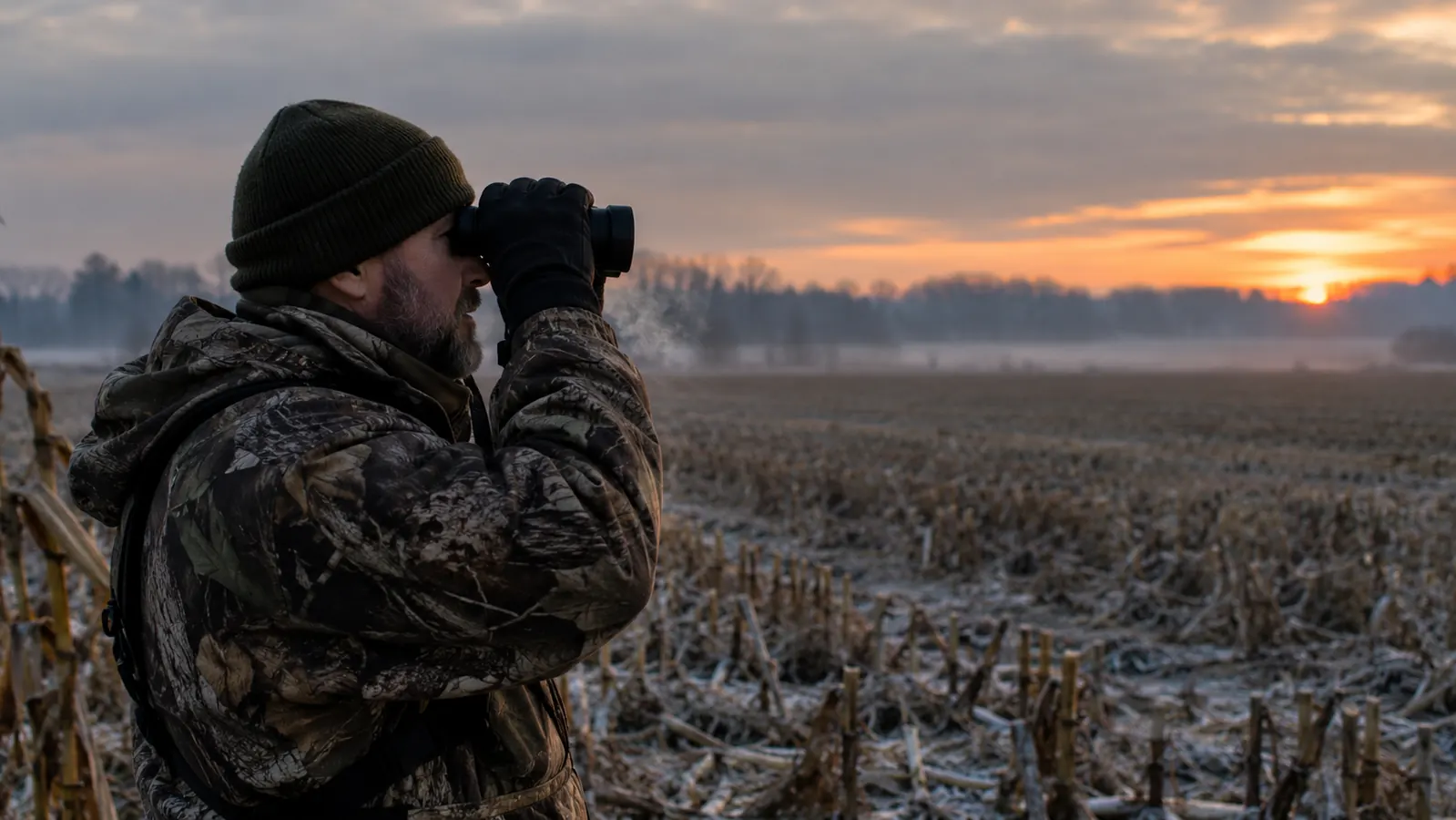
Here is what nobody tells you about the Vortex Crossfire HD 10x42: it is not the sharpest binocular you can buy, and it is not the brightest. What it is, is the pair that ends up in your truck for every single trip, because you are not scared to use it like gear. I have carried mine through two full seasons, and I think that trade matters more than any spec sheet ever will.
When I ordered these, I read every review I could find, and most of them painted a picture of a binocular with no faults at all. That is not my experience. The eye relief is tight if you wear glasses. The focus wheel has more travel than I like on a cold morning. And in the last twenty minutes of shooting light, a more expensive pair will absolutely show you more. None of that makes this a bad buy. It makes it an honest one, and that is what I am going to give you here.
The Quick Verdict
A tough, clear, honest 10x42 that belongs in every truck and boat, as long as you know its limits at first and last light.
Amazon Check Today's Price →The 10x42 that rides along on every trip, not just the ones that count
Two seasons in, mine have been rained on, bounced around the truck, and handed to a friend who dropped them in gravel. They still line up sharp. Check today's price and see exactly what the Vortex warranty covers before you buy.
Amazon Check Today's Price on Amazon →How I've Used It
For context, I am Cal, I live on a few acres in rural Kentucky, and I hunt whitetail and turkey on family land and a public wildlife area. I mostly hunt from a ground blind and a ladder stand, and the rest of the year I fish bass, crappie and catfish from a 14-foot aluminum jon boat or straight off the bank. That means my binoculars get used three ways: glassing field edges from a seated position, scanning a lake from a moving boat, and sitting on the passenger seat of my truck for weeks at a time.
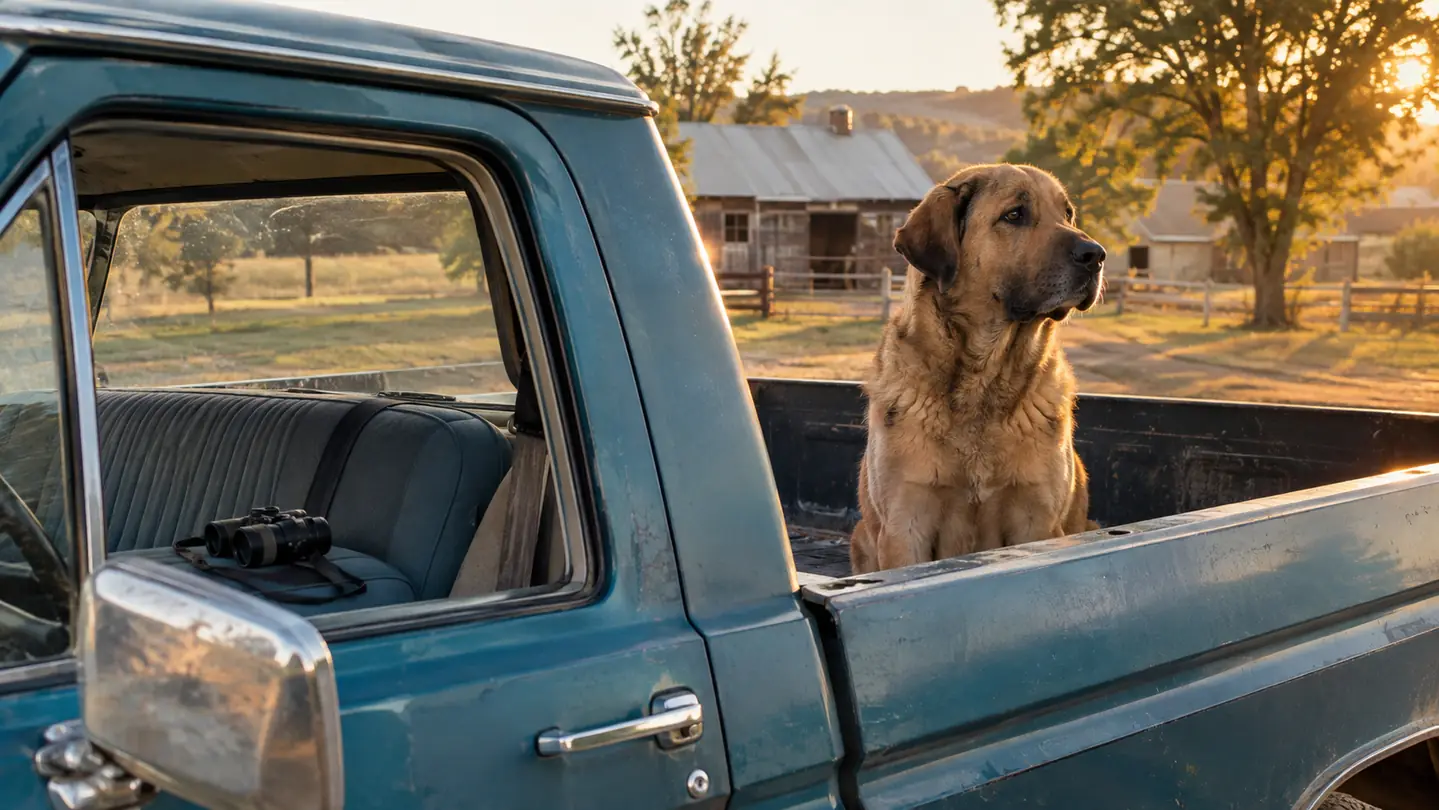
Last deer season I left the Crossfire HD in the blind for a month straight, and they dealt with condensation every morning and a hard frost most of them. This spring I took them out on the lake every weekend and they got splashed more than once. They have also spent plenty of nights in the truck, rattling around the seat and the floorboard, and the focus wheel still turns smooth and the image still lines up. Scout, my seven-year-old retriever, rides along for most of it, and he is the reason I keep the neck strap short so the binoculars do not swing and spook a turkey.
The honest part: they are not a featherweight. At just over 21 ounces, you notice them on a chest harness after a long walk, and if you are a hiker first and a hunter second, that weight matters to you. For me, the trips are short enough that I would rather have the steady image that comes with a little heft. Your mileage may vary, and that is fine.
What the HD Glass Actually Buys You
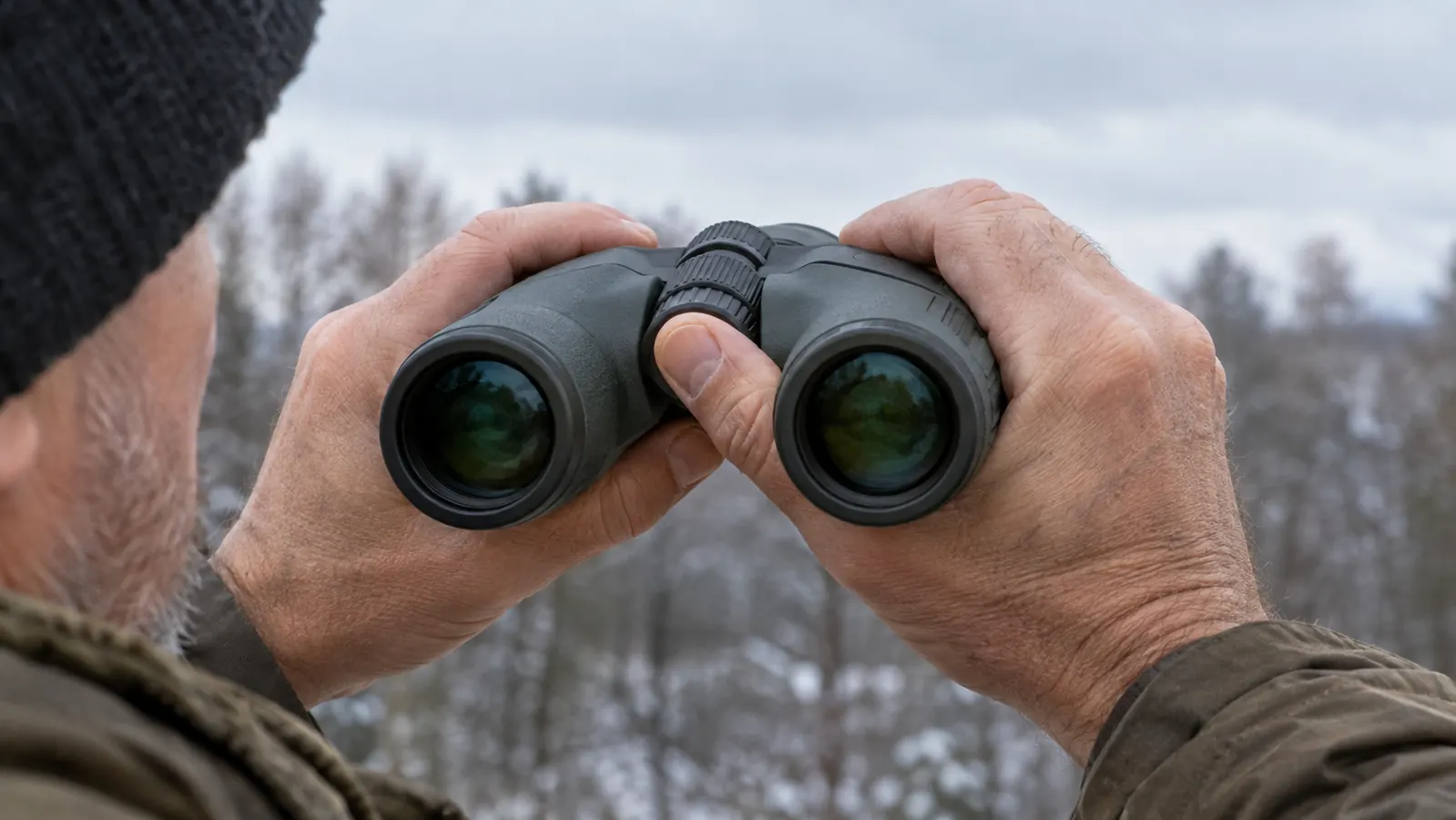
The HD in the name refers to extra-low dispersion glass in the lenses, and it does a real job, not a marketing one. Compared with older non-HD glass, colors look more natural and the image has less of that blue or yellow tint cheap binoculars give you. On a green field in early November, I can pick out individual turkey feathers at 200 yards, and that is something I could not do with the pair I had before.
The other thing this glass does is hold its sharpness across the whole view. Some binoculars are sharp in the center and blurry at the edge, and you learn to ignore the outside of the circle. These stay usable almost to the edge. That matters when you are scanning a tree line for a deer that is mostly hidden, because you see it in your peripheral vision before you ever center it.
Now the caveat, because this is the part reviews skip. At this level, the glass is good, not great. If you put these next to a pair in a much higher class, you will see the difference in low light and in fine detail at long range. What you will not see is a difference that changes whether you fill a tag. I have yet to miss a deer because of what these could not show me, and I have been hunting this same ground for thirty years.
What Nobody Tells You About the Eyecups
Here is the thing I wish someone had told me before I bought them: the eyecups work fine, but they demand to be used correctly. They twist up in two positions, and if you wear glasses like I do, you need to twist them all the way down and hold the binoculars tight to your face. If you leave them up, you get blacked-out edges and you will think the binoculars are broken. They are not. You are just using them wrong.
Eye relief is listed at just over 16 millimeters, and that is workable but not generous. With my glasses on, I have to press in a little to get the full circle of view, and people with thick frames or deep-set eyes may find it fussy. If you wear glasses and you can try a pair before buying, do that. If you cannot, buy from a place with a return policy and test them the day they arrive.
The Honest Truth About Low Light
The 10x42 is a do-everything size, and that means it compromises on last light. A 10x42 gathers less light than an 8x42 or a 10x50, and on a cloudy evening in a hardwood hollow, you will notice it. The last twenty minutes of legal shooting light is exactly when a big buck steps out, and it is the one time I wish I had a bigger objective lens. I know because I have sat through enough cold evenings to count them.
I have tested that honestly. Sitting in a ladder stand on a December evening, I could make out a deer at 150 yards until about fifteen minutes after sunset on a clear day, and maybe ten minutes on an overcast one. After that, the image goes soft and I rely on my eyes more than the glass. For an open-field hunter, that is a real limitation. For a timber hunter who mostly shoots inside 100 yards, it barely matters.
If most of your hunting happens in low light, the answer is not a more expensive 10x42. It is an 8x42 or a 10x50 with a bigger exit pupil. I will tell you that even though it might send you to a different pair, because the point of this review is to keep you from spending money on the wrong thing.
The Warranty and What Unconditional Really Means
Vortex backs these with an unconditional lifetime warranty. No receipt, no registration, no questions, and it transfers to whoever owns them next. I have read the fine print and I have seen it work: a buddy of mine sent in a pair of Vortex binoculars that he ran over with a truck, and they came back fixed with no bill. That is the kind of thing that makes a working man trust a company.
The caveat is what the warranty does not cover. It does not cover loss or theft, and it does not cover the day you leave them on a stump and walk off. It covers defects and damage, and in practice Vortex has a reputation for being generous about what counts as damage. Still, treat them like gear, not like a lease. They are tough, but they are not invincible.
Fit and Feel in the Field
The body is wrapped in a rubber armor that gives you a solid grip in the rain, and the whole thing is nitrogen purged and O-ring sealed, which is the standard way of saying it will not fog up inside. Mine have been from a 90-degree August afternoon to a 14-degree December morning, and I have never seen a drop of moisture inside the lenses.
The focus wheel turns the wrong way for some people. Mine turns counterclockwise to focus closer, and if you are used to a pair that turns the other way, you will spin it the wrong direction for the first few trips. It takes about an afternoon to unlearn, but it is worth knowing before you buy, because nothing makes a person hate a binocular faster than a backwards focus wheel.
Tripod mounting is possible with an adapter, but I have never bothered. At 10x, hand shake is a real thing, and I brace against a tree or the truck hood when I need a steady look. On the boat, I sit down and rest my elbows on my knees. You do not need a tripod for these, but you do need to learn to hold them steady.
What I Liked
- Clear, natural color across the whole field of view
- Tough enough for a truck seat, a boat deck, and a ground blind
- Vortex lifetime warranty with no receipt and no registration
- Comfortable grip in wet weather
- Honest value for what it is
Where It Falls Short
- Eye relief is tight if you wear glasses
- Last-light performance trails bigger objective lenses
- Focus wheel turns opposite the direction many hunters expect
- Noticeable weight on a long hike
- Eyecups need deliberate positioning to avoid blacked-out edges
I have yet to miss a deer because of what these could not show me.
What's in the Box and What You Will Add
The box is simple: the binoculars, a neck strap, tethered objective covers, a rainguard for the eyepieces, a carrying case, and a lens cloth. The case is functional but not something you will reach for every day, and the neck strap is the kind that works better if you swap in a wide padded one for all-day carry. I have had the same complaints about binoculars in a much higher class, so I do not hold it against these.
What you will add on your own: a chest harness, because a binocular that hangs on a strap bounces when you walk, and a small lens brush for the field. I keep mine in the truck in the factory case with the rainguard on, and after two years the lenses still look like new. That is less about the accessories and more about the lens coatings, which shed water and smudges better than I expected.
One Pair for Deer, Turkey, and the Lake
The 10x42 is the size that does everything acceptably. In the deer stand, 10 power gets you across a field and into the tree line. For turkey, it gives you enough reach to watch a strutting tom from 100 yards without spooking him. On the lake, it is the pair you use to find a brush pile on the far bank or watch a heron work the shallows. I do not carry a second pair for any of it.
The one thing I would change is the size of the objective lens on dark timber days, and I already told you about that. Everything else is a matter of learning the tool. Once I got used to the focus direction and the eyecup position, these became an extension of my hands. That is the real test of any gear: not what it does on a bench, but whether you reach for it without thinking.
Who This Is For
Buy the Crossfire HD 10x42 if you are a weekend hunter and angler who wants one pair of binoculars that does everything well enough. It is for the person who would rather spend the difference on gas and licenses than on glass they will be afraid to scratch. It is for the guy who keeps gear in the truck, drops things, and wants a warranty that treats him like a customer instead of a liability.
It is also for the new hunter who is buying their first real binocular. The 10x42 is the most useful all-around size, the controls are simple, and you will not be overthinking it. You will learn what you actually need from a binocular, and when you outgrow these in five or ten years, you will know exactly what to buy next.
Who Should Skip It
Skip these if you hunt open country where every shot is 300 yards and every minute of last light counts. You want a bigger objective lens or brighter glass, and you should be looking at a different class entirely. Skip them if you wear thick glasses and you cannot try them first, because the eye relief will frustrate you no matter how good the image is.
And skip them if you already own a pair of Vortex Crossfire HD from years back and you are hoping the new version is a big step up. It is the same binocular with minor updates. The honest advice is to keep what you have and spend the money on ammo or a food plot. That is not the answer a review is supposed to give, but it is the one I would give you at my kitchen table.
Two seasons in, these are still the pair I grab first
The Crossfire HD 10x42 is the honest middle ground: clear enough, tough enough, and backed by a warranty that actually means something. If that sounds like your kind of gear, check today's price on Amazon and read the recent reviews before you decide.
Amazon Check Today's Price on Amazon →